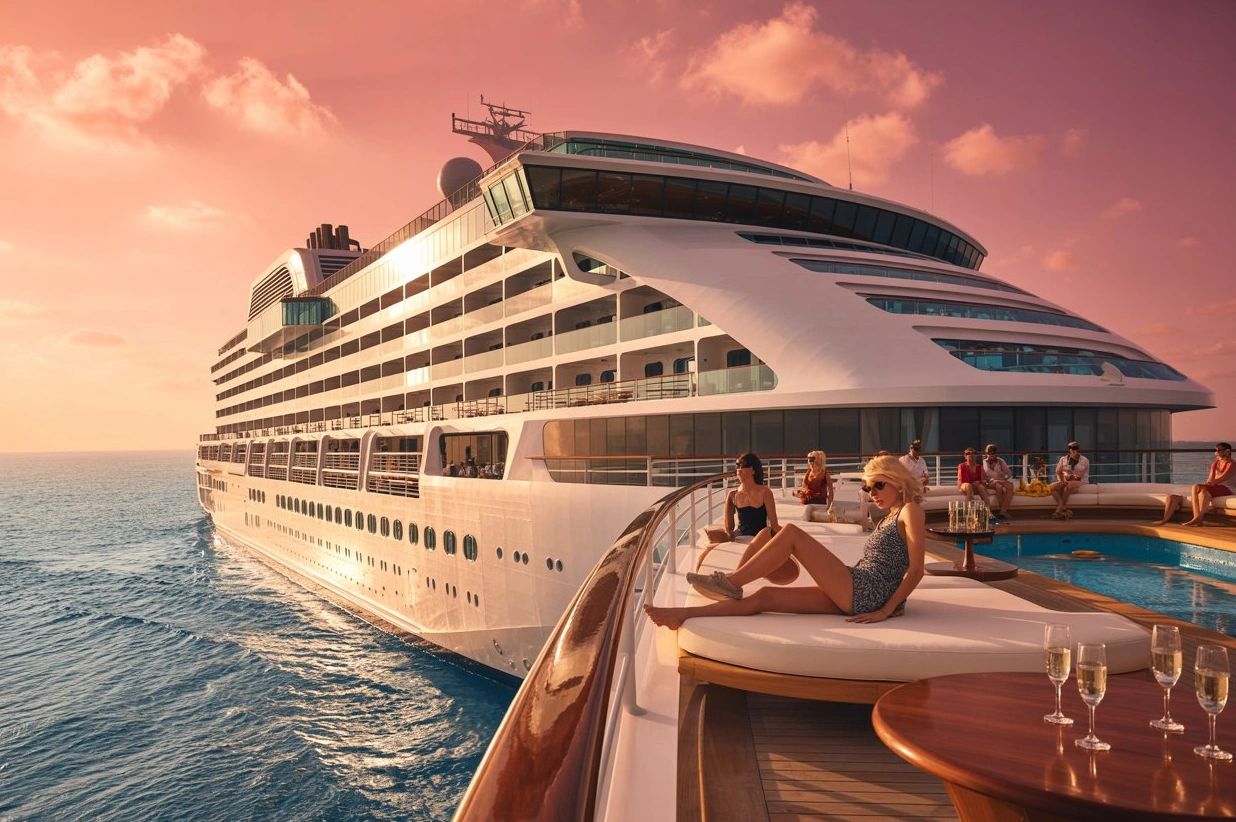
Travelers Are Moving More Slowly Again
Luxury cruises never disappeared entirely, but the reasons people choose them have changed noticeably.
A decade ago, premium cruising often centered around scale and spectacle. Larger ships, bigger entertainment venues, elaborate dining rooms, and highly structured itineraries shaped much of the industry’s identity. Today, many travelers seem drawn toward almost the opposite atmosphere.
Calmer spaces. Longer voyages. Smaller ships. Better suites. More time spent at sea.
The shift feels connected to broader travel fatigue.
Frequent travelers spend much of the year moving through crowded airports, tightly planned schedules, delayed connections, and hotel stays that blur together after a while. Luxury cruises offer a different rhythm. You unpack once, settle into a stable environment, and allow the scenery itself to change around you gradually.
That simplicity carries more emotional value now than it once did.
Passengers often describe feeling physically calmer within only a few days onboard, though the reason is usually practical rather than dramatic. Less decision-making. Less logistical pressure. Fewer transitions between accommodations.
The ship handles movement quietly in the background.
Premium Cruise Design Has Changed
One major reason luxury cruising feels more appealing again is because the ships themselves have evolved.
Modern premium vessels no longer resemble the overly formal floating resorts many travelers still imagine. Newer ships feel closer to contemporary coastal hotels or private residential clubs. Design trends have shifted toward softer lighting, quieter materials, open-air spaces, panoramic lounges, and suites that prioritize livability over visual excess.
Passengers notice the difference immediately.
Hallways remain calmer. Observation lounges feel more spacious. Restaurants use warmer lighting and lower noise levels. Outdoor terraces stay integrated into daily life onboard instead of functioning only as decorative deck areas.
The atmosphere feels more grounded.
Travelers increasingly prefer environments that support comfort naturally rather than constantly performing luxury through visible extravagance. Cruise lines have responded accordingly.
Suites Designed for Actual Living
Luxury cruise suites today function less like temporary hotel rooms and more like small private apartments moving across the water.
Large windows, deeper seating areas, residential-style bathrooms, dining tables near the view, and usable outdoor terraces all encourage passengers to spend meaningful time inside the suite itself.
That matters during longer voyages.
Sea days become more enjoyable when the room feels genuinely comfortable rather than simply polished for photographs. Travelers read beside the windows during bad weather, order breakfast to the balcony during coastal arrivals, or spend entire evenings inside watching harbor lights disappear into darkness.
The strongest suites support ordinary routines beautifully.
That balance between comfort and scenery is difficult to recreate elsewhere in modern travel.
Smaller Ships, Softer Atmosphere
Alongside larger premium vessels, smaller luxury ships are becoming increasingly popular again as well.
Passengers often prefer quieter onboard environments where lounges remain peaceful, staff recognition happens naturally, and public spaces feel manageable rather than crowded. Smaller ships also reach destinations larger vessels cannot access comfortably.
This changes the entire tone of the voyage.
Arrivals happen closer to historic waterfronts instead of distant commercial terminals. Excursions move more slowly. Observation decks remain usable without competition for space. Travelers settle into routines faster because the environment feels more intimate.
The ship itself begins resembling a temporary neighborhood rather than a tourism machine.
The Rise of Scenic Travel
Luxury travel culture has shifted toward scenery and atmosphere rather than nonstop activity.
People still value cultural experiences ashore, but many travelers no longer want every hour packed with movement. Scenic cruising supports a slower form of observation that feels increasingly appealing after years of highly optimized tourism.
At sea, weather becomes part of the journey again.
Passengers notice changing cloud cover across the water, fishing boats near smaller ports, distant coastlines appearing gradually through morning fog, or harbor lights stretching across the horizon after sunset departures.
These are quiet experiences.
Yet they often become more memorable than crowded landmarks or rushed sightseeing schedules because travelers actually have time to absorb them.
Northern Europe and Environmental Travel
The popularity of Northern European cruise routes reflects this shift clearly.
Norwegian fjords, Icelandic coastlines, Baltic sailings, and Scottish island itineraries attract travelers interested less in nightlife or shopping and more in environmental immersion. Observation lounges stay full during these routes even in bad weather because passengers remain engaged with the scenery itself.
The ship slows people down naturally.
Travelers spend hours simply watching low clouds move across cliffs or sunlight break unevenly through fog over the water. There is little urgency during these passages.
That emotional tone defines much of modern luxury cruising now.
Mediterranean Routes Still Evolving
Mediterranean cruises remain popular too, though travelers approach them differently than before.
Passengers increasingly seek smaller ports, extended overnight stays, and quieter coastal destinations instead of rushing through only major tourist cities. Evening departures from places like Dubrovnik, coastal Greece, southern Italy, or smaller Adriatic towns often become highlights of the voyage themselves.
People linger onboard during these moments.
Dinner stretches longer outdoors. Balconies remain open late into the evening while harbor lights fade behind the ship. Conversations soften beneath warm sea air and distant coastal movement.
The atmosphere matters as much as the itinerary itself now.
Sea Days Are No Longer Viewed as Empty Time
One of the clearest signs of luxury cruising’s resurgence is the growing appreciation for sea days.
First-time passengers often worry about having “nothing to do” between ports. Experienced travelers usually feel the opposite. Sea days allow the ship itself to become the destination fully.
People settle into rhythms onboard.
Late breakfasts near panoramic windows. Long afternoons reading in observation lounges. Spa visits during rough weather crossings. Quiet dinners after hours spent simply watching the water.
There is freedom in not needing to arrive anywhere immediately.
Luxury cruises create environments where travelers can remain still while still feeling movement through the scenery and the ship itself. That combination feels increasingly rare in modern tourism.
Observation Spaces Matter More Now
Cruise design reflects this changing behavior.
Modern premium ships dedicate significant space to panoramic lounges, quiet cafés, sheltered terraces, libraries, and observation areas specifically because passengers spend more time using them than they once did.
These spaces develop their own atmosphere throughout the voyage.
Morning coffee crowds differ from evening cocktail groups. Readers return to familiar corners each afternoon. During scenic passages, strangers occasionally gather in near silence simply watching the landscape together.
The social energy stays calm even when the ship feels active.
That restraint appeals strongly to modern luxury travelers.
Wellness Travel and Ocean Living
Luxury cruising also aligns naturally with broader wellness travel trends, though often in quieter ways than destination resorts or wellness retreats.
Ocean travel encourages slower pacing almost automatically. Walking replaces driving onboard. Outdoor air remains part of daily life. Meals happen without commuting between venues. Sleep patterns often improve after several nights at sea because environmental noise decreases and routines simplify.
Passengers notice these effects gradually.
Morning coffee feels slower. Screen time decreases. Even weather becomes something people observe rather than avoid.
Modern cruise wellness spaces reflect this softer approach too.
Spas now emphasize natural light, sea views, thermal suites overlooking the water, outdoor relaxation decks, and treatments integrated into the rhythm of the voyage itself rather than isolated luxury experiences disconnected from the environment.
Weather Creates Atmosphere
Weather plays a larger emotional role at sea than many travelers expect.
Rain changes the mood inside the lounges. Fog softens coastal arrivals. Wind affects deck activity and outdoor dining patterns. Rough crossings encourage passengers to settle deeper into the ship’s quieter interior spaces.
The environment stays dynamic continuously.
That connection to changing conditions creates immersion without requiring constant stimulation or entertainment.
Travel feels physical again.
Travelers Want Fewer Transitions
Perhaps the simplest explanation for luxury cruising’s renewed popularity is this: people are tired of constant transitions.
Packing and unpacking repeatedly. Navigating airports every few days. Managing transfers between cities. Relearning new hotel layouts night after night.
Cruise travel removes much of that friction.
The suite remains stable. Staff become familiar. Restaurants stay consistent. Travelers settle into habits instead of rebuilding routines constantly throughout the trip.
That continuity creates genuine rest.
Even busy itineraries feel calmer because passengers always return to the same private environment at the end of the day while the ship quietly handles the movement itself.
Luxury cruises increasingly succeed not because they feel extravagant, but because they feel sustainable.
They offer comfort without constant pressure, movement without chaos, and enough stillness for travelers to notice where they are again.
For many people, that balance feels more valuable now than ever before.
FAQs
Why are luxury cruises becoming popular again?
Many travelers now prefer slower, more comfortable forms of travel that reduce logistical stress while still offering scenic variety, quality accommodations, and immersive experiences.
Are modern luxury cruises less formal than before?
Generally, yes. Many premium cruise lines now focus on relaxed elegance, quieter social spaces, flexible dining, and contemporary residential-style design.
Do travelers enjoy sea days on luxury cruises?
Very much so. Sea days allow passengers to fully enjoy the ship itself, settle into slower routines, and experience uninterrupted ocean scenery and onboard relaxation.