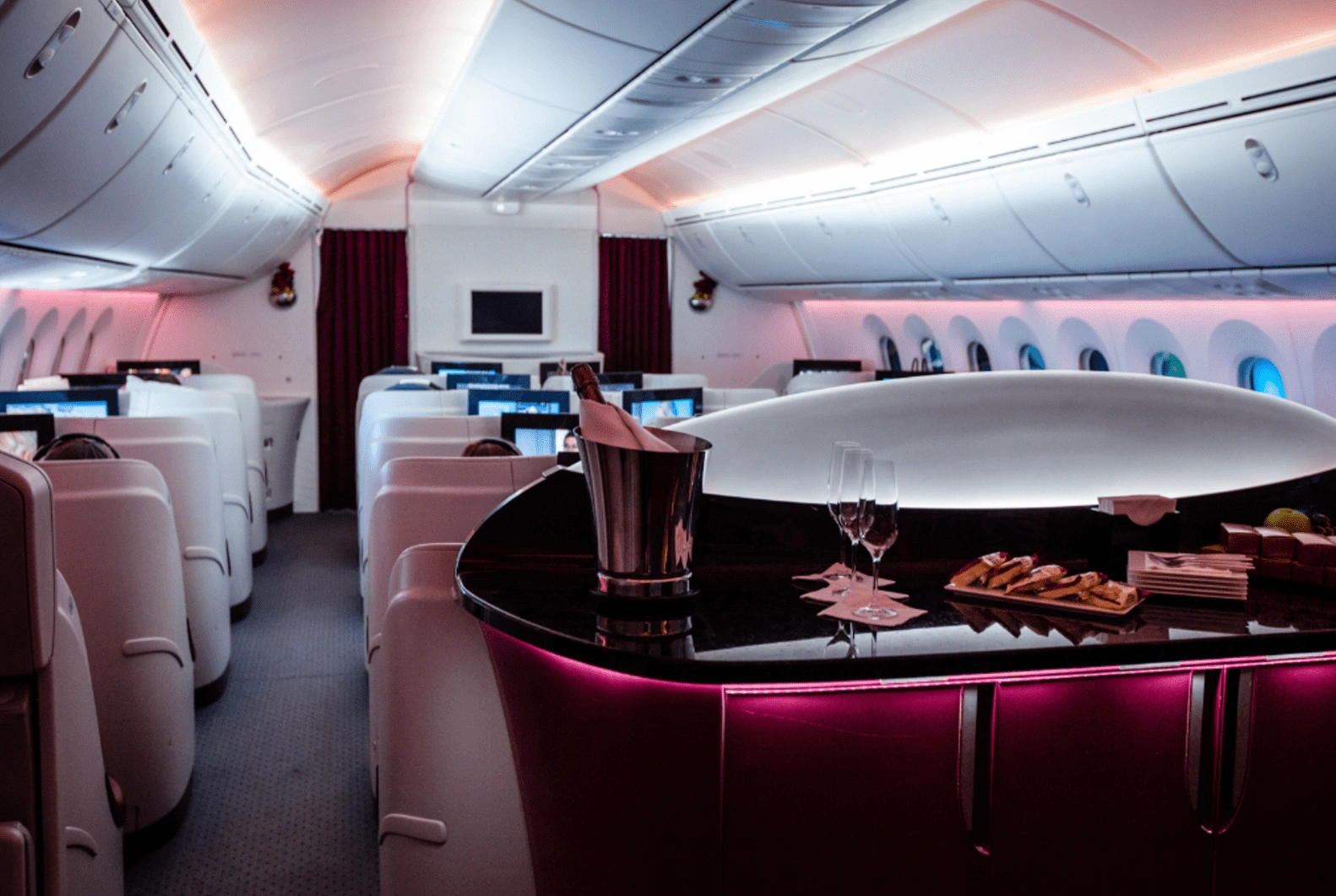
The first noticeable change usually happens before boarding.
Airports still move at full speed. Screens flicker above crowded gates, rolling suitcases echo across polished floors, and departure boards continue cycling through delays and weather updates. Yet inside business class lounges, the pace softens almost immediately. Lighting becomes warmer. Conversations lower in volume. Travelers spread out across long tables near the windows, checking itineraries while rain drifts across the runway outside.
A few people are still working. Others have already shifted mentally into travel mode.
This quieter transition has become part of modern premium travel culture. Business class is no longer viewed only as a practical upgrade for long-haul comfort or corporate schedules. Increasingly, it sits somewhere between efficiency and lifestyle — connected not only to flights themselves, but also to slower ocean routes, extended resort stays, and a broader preference for calmer international travel experiences.
That shift is visible across Mediterranean cruise terminals, coastal rail connections, private marina districts, and airport lounges from Singapore to Lisbon. Travelers move more deliberately now. Many stay longer in fewer places. Ocean-facing hotels are booked for a week instead of a weekend. Cruise itineraries are chosen for scenery and onboard atmosphere rather than sheer activity.
The details matter more than the spectacle.
Morning light through lounge glass. A quiet upper deck after dinner. Linen jackets folded over café chairs near the harbor. Weather moving across distant coastlines while ferries disappear into low clouds offshore.
Those smaller observations tend to stay with people longer than the heavily photographed moments.
Longer Routes, Slower Schedules
A noticeable number of premium travelers have started building itineraries around slower movement rather than packed schedules. Multi-stop business trips now blend more naturally with leisure stays, especially along coastal regions where transportation networks connect airports, ports, and resort towns with relative ease.
Southern Europe continues to shape much of this travel pattern.
In cities like Barcelona, Athens, and Venice, cruise passengers often arrive several days before departure instead of boarding immediately. The extra time changes the tone of the trip. People settle into neighborhoods rather than rushing between landmarks. Mornings stretch longer over breakfast terraces. Late afternoon walks along marina districts become part of the experience itself.
Business class cabins support this style of travel partly because they reduce the fatigue attached to long-distance movement. Travelers arrive rested enough to continue naturally into another environment rather than spending a full day recovering indoors.
That distinction matters more on ocean itineraries.
Ports tend to operate on their own rhythm. Early baggage transfers. Quiet terminal corridors before sunrise. Staff preparing gangways while café lights begin turning on across the harbor. Travelers carrying garment bags and soft leather weekender luggage move gradually through security without much urgency.
By the time ships leave port, the city often feels distant already.
Ocean Travel and the Return of Spacious Interiors
Large cruise vessels once leaned heavily toward spectacle. The newer generation of premium ocean travel feels more restrained visually, particularly in business-class-adjacent luxury markets where travelers increasingly prefer space, texture, and comfort over theatrical design.
Interior materials have shifted noticeably.
Natural oak finishes appear more frequently than glossy marble. Lighting tends to stay indirect and softer in tone. Observation lounges rely less on dramatic color schemes and more on wide glass panels, neutral fabrics, brushed metal, and layered seating arrangements designed for longer use throughout the day.
The effect is subtle but important.
Passengers actually remain in these spaces longer now. Afternoon lounges fill gradually after excursions end. Some people read near the windows while weather moves across the water outside. Others sit quietly with coffee or cocktails while ships reposition along coastlines.
Not every social space feels performative anymore.
That change reflects broader lifestyle trends beyond cruises themselves. Premium travelers increasingly favor environments that feel usable and believable rather than overtly luxurious at every moment.
Scenic Routes Shaping Premium Cruise Demand
Certain cruise routes continue attracting travelers less because of onboard entertainment and more because of environmental movement itself.
Northern Europe remains one of the clearest examples.
Along the Norwegian coast, changing weather becomes part of the daily atmosphere onboard. Mornings can begin with pale sunlight reflecting against still water before cloud cover settles across the fjords by afternoon. Passengers drift quietly between decks carrying blankets or coffee cups while distant villages appear briefly along the shoreline.
There is often very little conversation during those stretches.
People simply watch the coastline move.
Mediterranean routes create a different mood altogether. Ports arrive closer together, temperatures stay warmer later into the evening, and outdoor dining becomes central to the onboard routine. In places like the Amalfi Coast or the Greek islands, ships frequently enter harbor during golden-hour light when waterfront buildings begin reflecting softer tones across the water.
Dinner service usually extends later on these itineraries.
Passengers return from shore excursions carrying small purchases from local shops — olive oils, linen shirts, paper-wrapped pastries, bottles of wine from hillside vineyards. Elevators become briefly crowded before the ship settles again into a slower nighttime atmosphere.
Farther east, routes through Southeast Asia continue growing among travelers seeking longer seasonal escapes. Singapore, Vietnam, Thailand, and coastal Japan all support a style of ocean travel where modern architecture, tropical weather, and regional food culture blend naturally into the journey.
Humidity changes the feel of these ports immediately. So does the air itself. Salt settles lightly on railings overnight. Open decks stay warm long after sunset.
The Rise of Hybrid Travel Lifestyles
Business class travel increasingly overlaps with resort culture in ways that barely existed a decade ago.
Travelers now combine multiple formats within one trip: long-haul business class flights, short luxury cruises, extended resort stays, and regional rail travel across coastal areas. Instead of separating “business travel” and “vacation travel,” many people move between both without a sharp dividing line.
Remote work contributed to some of this shift, but lifestyle preferences seem equally important.
People appear less interested in collecting destinations rapidly. They spend more time choosing accommodations carefully instead. Ocean-facing suites with larger terraces. Hotels connected directly to marina promenades. Resorts designed with quieter shared spaces instead of heavily programmed entertainment schedules.
The social atmosphere inside these environments has changed too.
You notice more solo travelers reading at breakfast. Small groups lingering over late lunches without obvious schedules. Couples staying onboard during port days simply because the ship itself feels calmer while everyone else is ashore.
Not every premium traveler wants constant activity anymore.
Dining Culture at Sea
Food remains one of the strongest markers separating modern premium travel from older luxury tourism models.
Large formal dining rooms still exist onboard many ships, but travelers increasingly drift toward smaller regional concepts instead. Coastal seafood menus, Mediterranean wine bars, Japanese counters with limited seating, and outdoor terrace restaurants tend to stay busy well into the evening.
Timing matters almost as much as the food itself.
Breakfast service onboard premium ships usually begins quietly. Early risers gather near the windows before excursions begin. Espresso machines hum continuously while sunlight moves slowly across the water outside. Crew members reset tables almost silently between guests.
The atmosphere changes later in the day.
Lunches become lighter in warmer regions — grilled fish, citrus salads, chilled wine, small plates shared slowly near open decks. Dinner stretches longer, particularly on sea days when passengers are less concerned with excursion schedules the next morning.
There is also far less emphasis now on overt formality.
Tailored clothing still appears regularly in premium dining rooms, but the overall mood feels more relaxed than it once did. Linen shirts, understated jewelry, soft knitwear, suede loafers. Elegant without obvious display.
Quiet Social Spaces and Observation Culture
One of the more interesting developments in business class travel culture is how much value travelers now place on observation itself.
People genuinely spend time sitting still again.
Observation decks, library lounges, upper-level cafés, and sheltered terrace spaces remain consistently occupied during long ocean crossings. Some travelers work briefly on tablets or laptops, but many simply watch movement outside: passing ferries, harbor traffic, weather fronts, changing coastlines.
These spaces rarely become loud.
Conversations stay low even during busy sailings. Glassware clinks softly against tables. Staff circulate carefully through narrow aisles carrying coffee trays while passengers continue looking outward toward the water.
At night, the atmosphere shifts again.
Harbors glow differently after midnight. Industrial lights reflect across darker water near cargo terminals while smaller coastal towns remain dimmer in the distance. Upper decks cool rapidly once wind picks up offshore. Blankets appear across outdoor seating areas almost automatically.
Some passengers stay outside much later than expected.
Modern Accommodations Beyond the Cabin
Premium travel habits now extend well beyond transportation itself.
Hotels connected to ports and marina districts increasingly mirror the same design language found in newer business class lounges and premium cruise interiors. Spacious layouts. Softer acoustics. Muted palettes. Larger windows positioned toward water or skyline views.
Bathrooms often receive more attention than grand lobbies now.
Deep stone sinks, textured walls, brushed brass fixtures, heated flooring, oversized showers with indirect lighting. Travelers spend more time inside accommodations during longer stays, so functionality matters alongside appearance.
Outdoor spaces matter too.
Resorts across coastal Italy, southern France, Croatia, and the Caribbean increasingly emphasize shaded terraces, sea-facing breakfast areas, and quieter pool environments rather than crowded entertainment zones.
People want places where they can remain comfortably for hours without feeling managed by a schedule.
A Different Kind of International Escape
The strongest luxury travel trend at the moment may simply be moderation.
Not minimalism exactly. Not austerity. Just less pressure to constantly maximize every hour of movement.
Business class travel fits naturally into that mindset because comfort begins earlier in the journey rather than arriving only at the destination. Travelers sleep properly during overnight flights. They arrive without exhaustion. They move into ports, hotels, trains, and ships with more energy available for observation and experience.
That changes the tone of entire trips.
Small moments become more noticeable when people are less fatigued. Fog drifting through harbor entrances early in the morning. Quiet conversations near wine bars after dinner. Rain passing briefly across open decks before clearing offshore. The texture of warm wood railings after a humid afternoon at sea.
Those details rarely appear in advertisements, but they tend to define how people remember travel afterward.
And increasingly, that seems to be what modern premium travelers are looking for.
FAQs
Why are longer coastal itineraries becoming more popular among premium travelers?
Many travelers now prefer slower schedules with fewer destination changes. Coastal itineraries allow more time onboard, more consistent scenery, and less physically demanding movement between locations.
Do business class travelers typically extend trips beyond flights now?
Quite often. Longer resort stays, short cruises, and regional rail travel are increasingly combined into one continuous trip rather than treated as separate experiences.
What kind of onboard spaces do travelers spend the most time in?
Observation lounges, outdoor terraces, smaller dining venues, and quieter upper-deck seating areas tend to attract the most consistent use, especially during sea days and evening departures from port.