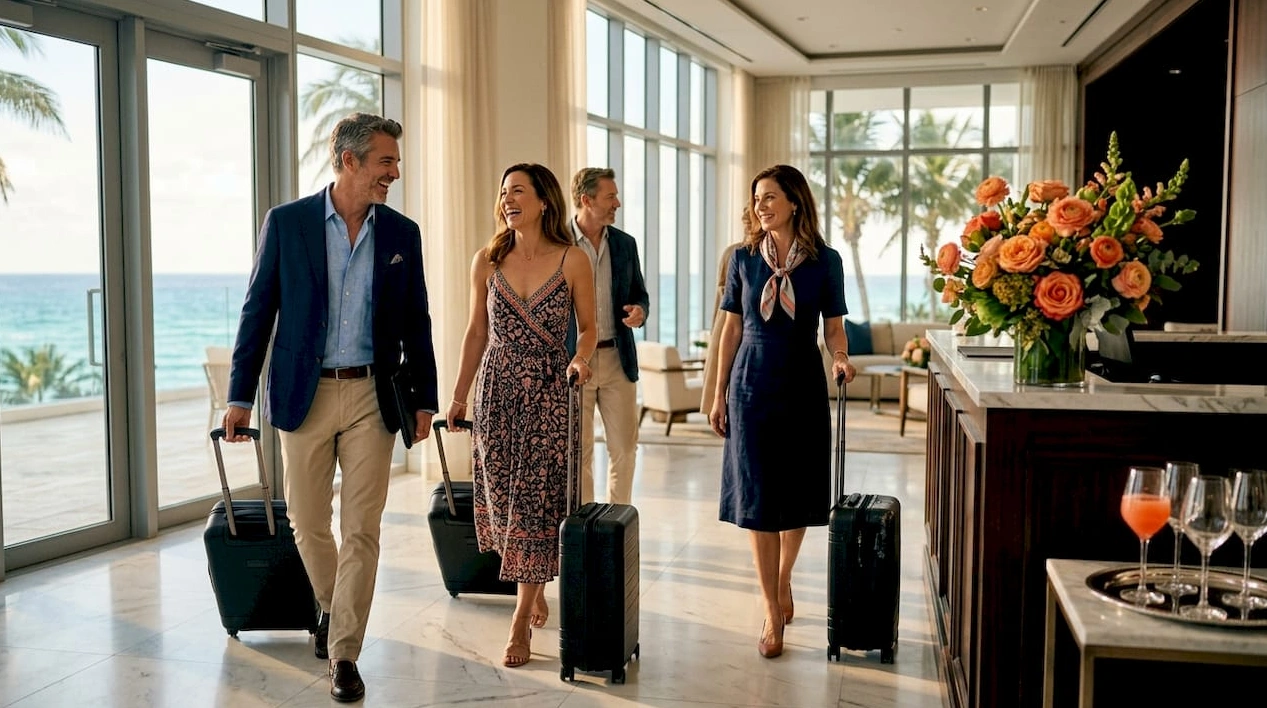
The arrival experience at many premium resorts has changed noticeably over the past few years.
Large reception desks are disappearing. Some properties now greet guests outdoors beneath shaded terraces instead of inside expansive marble lobbies. Others guide arrivals through gardens, stone walkways, or open-air courtyards where the sound of water and distant conversation settles the pace before room keys are even exchanged.
It feels intentional, but not staged.
The modern traveler — particularly those taking fewer but longer international trips — seems increasingly interested in environments that reduce noise rather than amplify it. Not silence exactly. More a sense of controlled calm. Spaces where movement feels easy and the day unfolds without constant scheduling.
Premium resorts have adapted to that shift faster than many traditional hotels.
This does not necessarily mean greater extravagance. Some of the most sought-after properties now avoid obvious displays of luxury altogether. Interiors feel softer. Lighting is lower. Restaurants are designed for longer evenings rather than quick turnover. Ocean views remain central, but they are framed carefully rather than aggressively presented at every angle.
The atmosphere inside these resorts often feels more residential than theatrical.
Guests notice it almost immediately, even if they do not describe it that way.
A Different Relationship With Time
One reason premium resorts continue attracting experienced travelers is simple: they remove pressure from the itinerary.
Traditional vacations often revolve around movement. Travelers rush through cities, schedule excursions back-to-back, and spend surprising amounts of time managing logistics. Even beautiful destinations can become tiring when every day feels compressed.
Resort culture works differently when designed well.
A guest may spend an entire afternoon moving only between a shaded terrace, a quiet pool, and an ocean-facing restaurant without feeling restless. The surroundings provide enough variation to hold attention naturally.
Along parts of the Mediterranean coastline, particularly in southern Italy, Croatia, and the Greek islands, many premium resorts now build entire properties around this slower pacing. Outdoor seating extends toward the water rather than inward toward entertainment zones. Walkways remain intentionally open. Landscaping softens transitions between private and social spaces.
Weather becomes part of the daily experience instead of an inconvenience to work around.
Morning sunlight moves slowly across stone courtyards. Wind shifts through linen curtains near breakfast terraces. Late afternoon heat empties pool areas briefly before guests reappear closer to sunset carrying books, cocktails, or simply looking for cooler air near the sea.
None of it feels hurried.
That distinction matters more now than it once did.
The Appeal of Coastal Architecture
Oceanfront resorts continue to dominate premium travel conversations partly because coastal architecture changes behavior in subtle ways.
Rooms remain brighter longer into the evening. Guests spend more time outdoors without planning to. Restaurants feel naturally active because people linger near open air and moving water.
Good resort design takes advantage of this without overwhelming the environment.
Some contemporary properties along the Amalfi Coast or the Balearic Islands rely heavily on natural materials that weather gradually beside the sea. Limestone paths soften under salt air. Wood railings fade slightly over time. Outdoor furniture uses textured neutral fabrics instead of glossy finishes designed mainly for photographs.
These details create a more believable atmosphere.
Travelers increasingly recognize when spaces are designed primarily for visual impact rather than comfort. Premium resorts succeeding today often balance aesthetics with livability. Suites feel easy to inhabit for several days at a time rather than merely impressive during arrival.
Windows stay open longer. Furniture faces outward toward water or gardens instead of televisions. Bathrooms rely on indirect lighting and textured stone rather than reflective surfaces everywhere.
At night, many of these resorts become quieter than expected.
Music remains low. Pathways are softly lit rather than brightly illuminated. Guests drift between bars, terraces, and restaurants without large crowds forming in any one place. Harbor sounds carry surprisingly far after midnight along calmer stretches of coastline.
That slower nighttime atmosphere tends to stay with people after the trip ends.
Premium Resorts Encourage Smaller Daily Routines
One overlooked aspect of modern resort travel is how quickly guests develop routines.
By the second morning, many travelers begin returning to the same breakfast tables. Staff recognize coffee orders before asking. Certain lounge chairs become unofficially claimed without anyone discussing it directly.
These patterns sound ordinary, but they create stability inside unfamiliar environments.
At premium resorts, daily life becomes pleasantly repetitive in a way many travelers no longer experience at home. Meals happen more slowly. Walking replaces transportation for several days. People sit outdoors longer than usual simply because the environment supports it.
On coastal properties in Portugal or southern France, breakfast often extends well into late morning. Sunlight shifts gradually across terraces while boats move quietly through nearby harbors. Newspapers remain folded beside untouched pastries. Conversations pause comfortably without anyone rushing to fill silence.
Afternoons slow further.
Some guests disappear into shaded reading lounges during hotter hours. Others move toward private cabanas near the water where staff circulate quietly with cold drinks and small dishes that appear almost casually rather than through formal service.
The pacing feels less transactional.
Even luxury resorts with larger guest capacity increasingly design spaces to preserve this sense of ease. Pools are separated into smaller sections. Restaurants avoid oversized dining rooms. Outdoor pathways curve gradually through gardens or along coastal edges rather than directing everyone through central gathering spaces.
Movement feels dispersed instead of concentrated.
Dining Has Become Part of the Destination
Food has always mattered in travel, but premium resorts now approach dining with more regional specificity than before.
Guests no longer expect identical luxury menus regardless of location. Travelers paying attention want environments that feel connected to the surrounding coastline, climate, and local routines.
In Greece, late dinners near the water remain common because evening temperatures encourage outdoor dining well after sunset. Along northern Spain or coastal Portugal, seafood service often feels simpler and less performative despite extremely high quality ingredients. Italian coastal resorts still favor longer multi-course evenings where guests remain seated for hours.
These distinctions shape the emotional texture of travel more than travelers sometimes realize.
Dining rooms themselves have changed too.
Older luxury hospitality often emphasized formality and visual symmetry. Contemporary premium resorts lean toward softer environments with layered lighting, quieter acoustics, and more relaxed seating arrangements. Guests arrive dressed elegantly but casually. Service remains attentive without becoming overly visible.
Weather continues influencing everything.
A windy evening along the Adriatic changes terrace dining entirely. Staff lower outdoor curtains halfway. Candles flicker unevenly across tables. Guests move inward toward darker wood interiors while harbor lights reflect against wet stone outside.
Those environmental shifts make resort life feel grounded rather than staged.
Quiet Social Spaces Are Becoming More Important
Modern luxury travelers still want social energy. They simply prefer more control over it.
Premium resorts increasingly succeed because they offer layered environments instead of forcing guests into constant interaction. A traveler can spend an evening entirely alone without feeling isolated or remain socially active without overwhelming noise and crowds.
Observation terraces, library lounges, garden bars, and covered outdoor seating areas all support this balance.
At many newer properties, the busiest spaces are not necessarily pools or restaurants but transitional areas between them. Guests gather naturally near outdoor fire pits after dinner or linger beside coastal walkways watching changing weather over the water.
Nothing specific is happening in these moments.
That is often the point.
Resorts that understand modern travel culture recognize that people are already overstimulated before arriving. They do not need constant entertainment schedules. They need environments where attention can settle gradually.
Even onboard culture from luxury ocean travel has influenced resort design. Many coastal properties now incorporate panoramic lounges, observation-style seating, and quieter communal areas resembling those found on smaller premium cruise ships.
Travelers who enjoy elegant ocean travel often look for similar pacing once back on land.
Scenic Destinations Continue Shaping Travel Choices
Certain destinations naturally support this slower premium resort experience better than others.
The Greek islands remain popular because movement between towns feels manageable and visually connected to the sea. The Amalfi Coast combines dramatic landscapes with compact social spaces that encourage walking rather than driving. Parts of coastal Montenegro and Croatia attract travelers looking for quieter harbors and less crowded resort environments.
Farther north, Scandinavian coastal resorts offer a completely different atmosphere. Cooler weather shifts social life indoors earlier. Lighting becomes warmer and more important. Guests gather around fireplaces, panoramic windows, and waterfront saunas while storms move visibly across darker coastlines.
Tropical destinations continue evolving too.
Premium resorts in Southeast Asia and the Indian Ocean increasingly focus on spatial privacy rather than oversized spectacle. Villas sit farther apart. Landscaping feels denser. Outdoor showers, shaded pavilions, and partially open-air interiors blur the distinction between architecture and environment.
The scenery changes how people move through the day.
Warm climates encourage outdoor breakfasts and evening walks near the water. Cooler coastal destinations create longer dinners and quieter indoor social spaces. Good resorts respond to these conditions instead of trying to standardize every experience.
Why Travelers Keep Returning to Premium Resorts
Many travelers who begin choosing premium resorts are not necessarily searching for status.
Often they are searching for reliability.
They want rooms that remain comfortable for extended stays. Restaurants where dinners do not feel rushed. Outdoor spaces that remain usable throughout the day. Staff who understand pacing rather than constantly interrupting it.
Comfort becomes more valuable than spectacle after enough travel experience.
The same traveler who once prioritized packed itineraries may eventually prefer spending five slower days near the sea instead of visiting multiple destinations in quick succession. Premium resorts fit naturally into that transition because they support staying still without boredom settling in too quickly.
There is also something increasingly appealing about environments designed around physical ease.
Walking distances feel manageable. Seating remains comfortable for long conversations. Lighting supports relaxation instead of performance. Ocean air circulates through public spaces. Noise stays controlled even when occupancy remains high.
These details rarely appear in marketing language, yet travelers remember them clearly afterward.
Late evenings often reveal the true character of a resort more honestly than daytime activity ever does. Staff reset terraces quietly. A few guests remain near the bar long after dinner service ends. Wind moves through palm trees or across stone pathways depending on the coastline. Harbor lights reflect unevenly across dark water.
People tend to slow down naturally in places built with patience.
That may be the strongest reason modern travelers continue choosing premium resorts. Not because every moment feels extraordinary, but because ordinary moments begin feeling easier to enjoy once the surrounding environment stops demanding so much attention.
FAQs
Why do premium resorts often feel less stressful than traditional hotels?
Premium resorts usually place more emphasis on spacing, sound control, slower service pacing, and outdoor environments that encourage guests to settle into routines instead of constantly moving between activities.
Are luxury resorts becoming more casual?
In many destinations, yes. Travelers still value excellent service and thoughtful design, but many modern resorts now favor relaxed elegance over highly formal hospitality.
Why do coastal resorts remain especially popular?
Oceanfront settings naturally change daily behavior. Guests spend more time outdoors, meals last longer, and the changing weather, light, and water views create a calmer pace throughout the trip.