Couples Travel Differently in Quiet Places
The atmosphere of a resort changes noticeably when it is designed around slower experiences rather than constant activity.
Couples tend to settle into those environments quickly.
One person wakes earlier and opens the curtains while the other stays half asleep listening to the ocean outside. Breakfast stretches into late morning because there is nowhere urgent to be afterward. Evening plans become less structured once the coastline begins glowing softly after sunset.
The strongest resorts for couples rarely depend on dramatic gestures.
They succeed through pacing, privacy, and environmental comfort. Quiet pathways between villas. Restaurants where conversations stay low. Outdoor spaces that allow people to spend long periods together without feeling observed or interrupted.
Modern couples increasingly seem drawn toward this softer style of travel.
Less performance. Less pressure to maximize every hour. More space to simply exist beside the water for several days without constant movement.
Oceanfront Villas and Private Space
Privacy has become one of the defining luxuries in couples travel.
Large resorts can still feel beautiful, but smaller coastal properties with separated villas, private terraces, and quieter beach areas often create stronger emotional atmosphere overall. Couples move differently when they feel physically unhurried.
Morning coffee happens outside barefoot. Books remain open beside the pool for hours. Afternoon naps become part of the day rather than interruptions to planned activity.
The villa itself becomes central to the experience.
Rooms That Feel Residential
Many modern luxury resorts now design accommodations less like hotel suites and more like temporary coastal homes.
Soft lighting, natural materials, open-air bathrooms, large terraces, and outdoor seating areas encourage couples to remain inside the villa comfortably for long stretches instead of treating the room only as a place to sleep.
This shift matters more than travelers sometimes expect beforehand.
Rain moving across the ocean feels different when watched from a private terrace rather than a crowded lobby. Late-night conversations continue longer beside the pool or balcony because the environment supports stillness naturally.
The strongest resorts understand that couples often remember quiet time inside the room as vividly as excursions or restaurants elsewhere on the property.
The Return of Outdoor Living
Coastal resorts also change how couples spend time together physically.
Meals happen outdoors. Walks replace transportation. Swimming becomes spontaneous rather than scheduled. Even reading feels different beside open water where wind, light, and changing weather remain present throughout the day.
Outdoor life softens conversation.
People pause more often. Silence becomes comfortable instead of awkward. Long stretches pass without needing entertainment because the environment itself remains visually and emotionally engaging.
That slower rhythm explains much of the appeal behind modern luxury resort travel for couples today.
Mediterranean Resorts and Warm Evenings
Mediterranean destinations continue attracting couples because they naturally support long, unhurried days.
Warm evenings extend outdoor life well after sunset. Restaurants remain active near the water late into the night. Stone terraces cool gradually after the heat of the afternoon while harbor lights reflect softly across the sea.
Couples drift slowly between dinner, shoreline walks, and quiet balcony hours without much structure.
Greek islands especially create this atmosphere beautifully.
Smaller cliffside resorts overlooking the Aegean often prioritize simplicity — white walls, open terraces, soft fabrics, panoramic water views — allowing the scenery itself to remain central. Travelers wake early simply to watch changing light across the coastline before breakfast begins.
The emotional tone feels calm rather than theatrical.
The Adriatic and Smaller Coastal Towns
The Adriatic coast offers a quieter version of Mediterranean couples travel.
Croatian islands, smaller harbor towns, and coastal villas in Montenegro increasingly attract travelers who want beauty without the intensity of larger tourism centers. The pace remains slower there.
Fishing boats return at sunrise. Dinner begins later after the heat softens. Couples sit beside the harbor long after restaurants close while the water stays nearly still beneath scattered lights.
The romance feels grounded in atmosphere instead of performance.
Tropical Resorts and Open-Air Calm
Tropical destinations create a different emotional experience altogether.
Warm air, outdoor architecture, and constant proximity to the ocean dissolve much of the separation between interior and exterior life. Couples spend remarkable amounts of time outside without consciously planning to do so.
Breakfast beside the beach. Afternoon rainstorms watched from covered terraces. Evening swims beneath soft lighting while palm trees move in the wind nearby.
The body relaxes differently in these climates.
The Maldives and Water-Centered Living
The Maldives remain especially popular with couples because water shapes nearly every part of the experience.
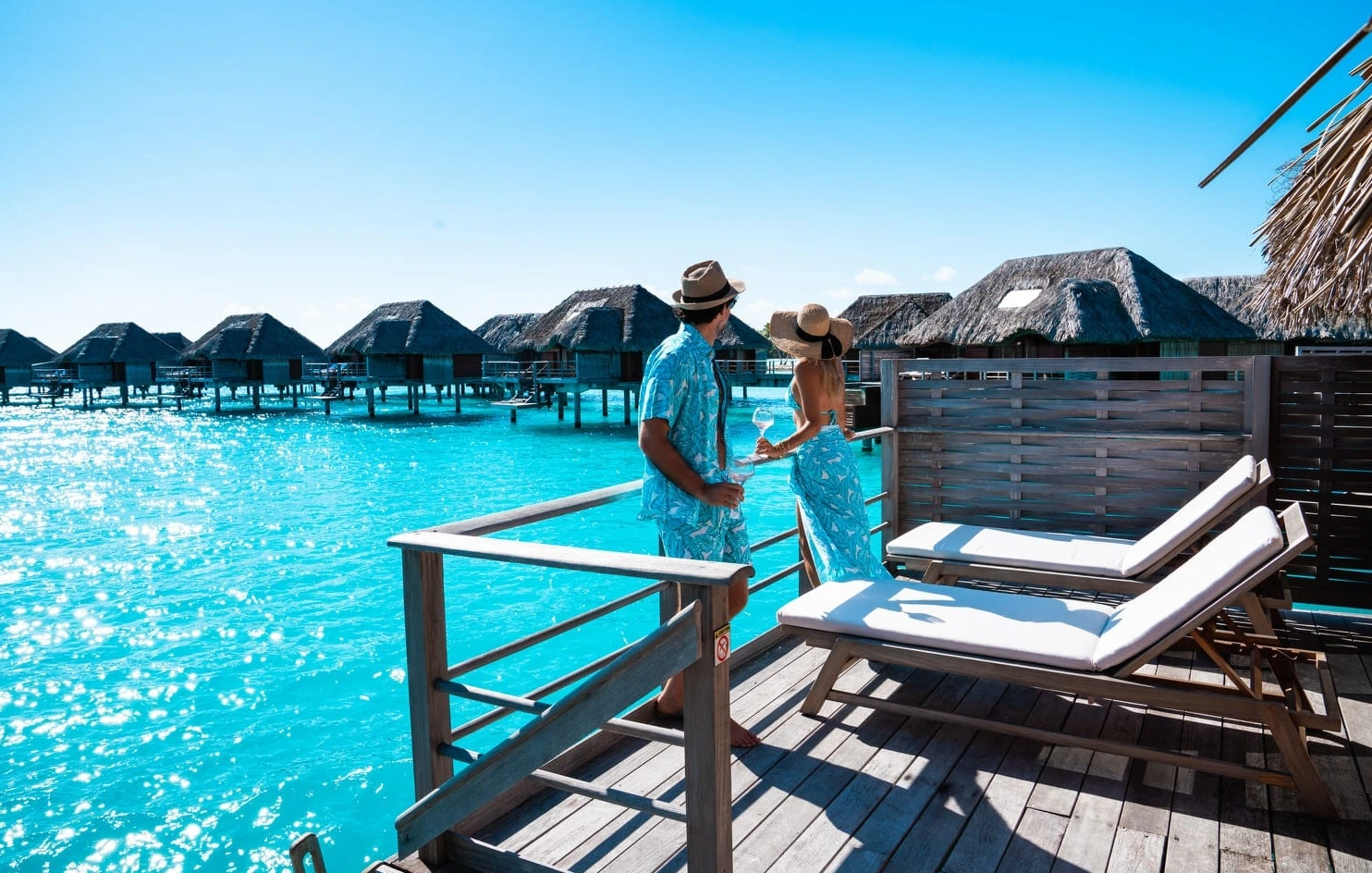
Overwater villas, private decks, outdoor dining spaces, and quiet lagoons create environments where couples remain visually connected to the ocean constantly. Morning light reflects through the room from every direction. Waves remain audible throughout the night.
The atmosphere encourages stillness naturally.
Travelers spend hours doing remarkably little — reading beside the water, floating quietly in private pools, watching weather shift across the horizon offshore.
Modern couples increasingly value these slower experiences over heavily scheduled romantic activities.
Southeast Asia and Softer Luxury
Southeast Asian resorts often balance luxury with a more relaxed emotional atmosphere.
Bali, Thailand, and quieter island destinations across Indonesia and Vietnam continue attracting couples because the hospitality feels warm without excessive formality. Outdoor dining remains central to daily life. Villas stay connected to gardens, beaches, and tropical weather conditions.
The luxury feels lived-in rather than staged.
That realism appeals strongly to travelers seeking meaningful rest rather than performative romance.
Quiet Shared Spaces Matter
One noticeable shift in couples-focused resort design is the growing importance of quiet public environments.
Observation terraces, smaller lounges, library cafés, beachside bars, and shaded gardens increasingly matter as much as pools or spas themselves. Couples want spaces where they can remain together comfortably without overwhelming social energy surrounding them.
The strongest resorts create atmosphere through restraint.
Music stays low. Lighting softens after sunset. Seating areas remain spaced apart enough for actual privacy and conversation.
These details shape emotional comfort more than dramatic architecture often does.
Dining That Encourages Lingering
Meals become especially memorable in resorts designed for couples.
The setting matters as much as the food itself.
Outdoor tables near the shoreline. Warm evening air. Candlelight reflecting across the water. Long pauses between conversations while boats move slowly offshore in the distance.
Dinner stretches naturally because there is nowhere else demanding attention afterward.
Couples remember these slower evenings vividly because they feel emotionally spacious in a way ordinary life rarely allows.
Wellness Without Structure
Many couples now seek relaxation more than activity during luxury travel.
The strongest resorts support this through atmosphere rather than rigid wellness programming. Spa areas overlook the ocean. Yoga decks face sunrise light across the water. Walking paths follow the coastline instead of enclosed resort layouts.
Guests participate casually.
A massage during rainy weather. Swimming before breakfast. Reading beside the beach after lunch.
The environment itself creates restoration without needing constant explanation or branding.
Weather Shapes Mood
One reason coastal resorts feel emotionally immersive is because weather remains visible throughout the experience.
Rain changes the atmosphere around dinner. Wind softens outdoor conversations. Fog reshapes island coastlines before sunrise. Storms move slowly across open water while couples remain sheltered beside outdoor terraces.
The environment never feels static.
That movement keeps attention gently focused outward instead of inward toward stress or routine.
Why Couples Continue Choosing Coastal Resorts
Modern relationships often exist within crowded schedules and constant interruption.
Phones, work demands, commuting, notifications, and social obligations fragment attention continuously. Beautiful coastal resorts create environments where couples regain uninterrupted time together without needing to force it artificially.
The strongest properties understand this instinctively.
They do not overwhelm guests with excessive entertainment or staged romance. Instead, they provide calm rooms, good food, beautiful scenery, privacy, and enough open time for couples to settle naturally into the rhythm of the place itself.
Travelers leave remembering surprisingly ordinary details.
Salt air drifting through open doors at night. Quiet breakfasts beside the ocean. Rain passing briefly across the terrace during lunch. Warm light across the water while dinner continues later than expected.
These moments stay meaningful because they feel believable.
The best resorts for couples never try too hard to define romance.
They simply create enough beauty and calm space for people to notice one another again without distraction for a while.