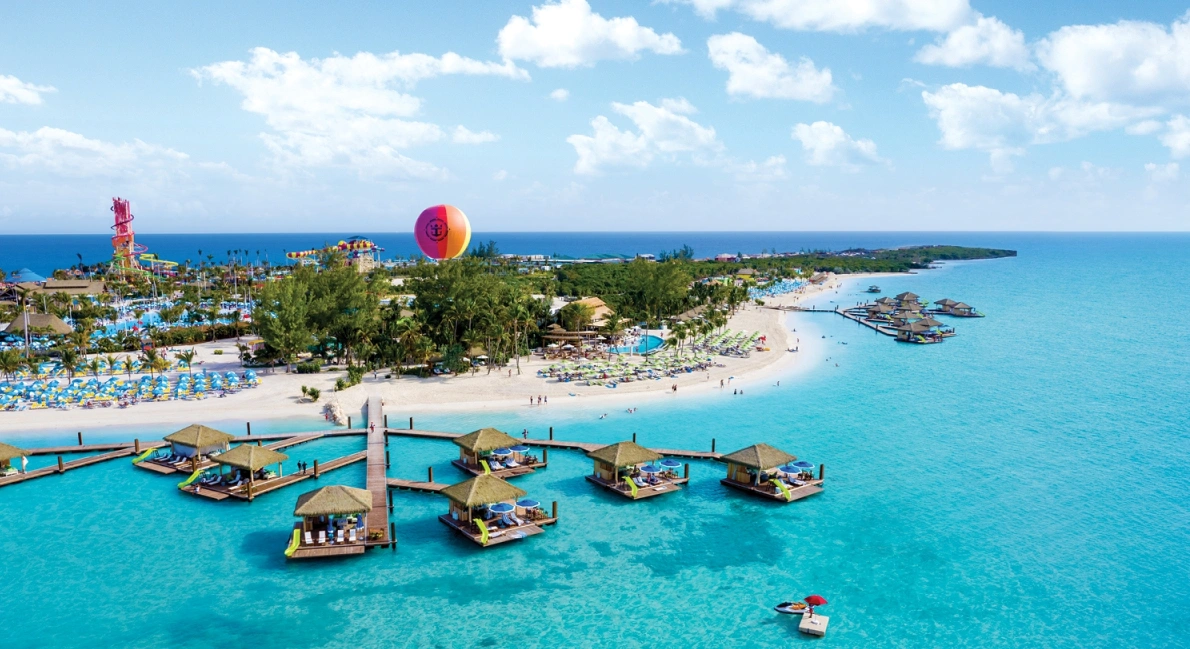
The Shoreline Appears Slowly
Approaching a private island resort by ship feels noticeably different from arriving at a busy port city.
There are no container terminals in the distance. No clusters of taxis waiting near crowded piers. The coastline usually appears gradually — pale sand first, then low greenery, then small wooden docks stretching into clear water while the ship slows almost silently offshore.
Passengers gather along outer decks earlier than usual on these mornings.
Coffee cups remain in hand longer. Cameras appear, though people often stop taking photos after a few minutes and simply lean against the railings watching the approach. Smaller boats move between the shoreline and the ship while sunlight settles across the water in shifting patterns.
Cruise resorts designed around private-island experiences have become one of the most quietly influential changes in premium ocean travel over the last decade.
Not because they are louder or more extravagant than traditional destinations. In many cases, they feel calmer than the ships themselves.
A Different Kind of Resort Environment
Traditional luxury resorts often surround guests with visible infrastructure — roads, neighboring hotels, shopping districts, beach traffic. Private island cruise resorts remove much of that visual clutter almost immediately.
The horizon stays open.
Buildings tend to sit lower against the landscape. Pathways curve through palms, coastal vegetation, or natural rock formations instead of formal urban layouts. Golf carts move quietly between shaded areas while most guests walk slowly between beaches, restaurants, and lounge spaces.
The atmosphere changes people’s behavior.
Passengers who spend days moving actively through European capitals or crowded Mediterranean ports often arrive at these island destinations and noticeably slow down within an hour. Shoes disappear. Phones stay unused longer. Lunch extends well past the middle of the afternoon.
There is less pressure to organize the day carefully.
Some travelers never move farther than a shaded beach chair and the nearby swimming area. Others drift between quieter coves, open-air restaurants, and observation decks built along the shoreline. The setting encourages loose routines rather than structured sightseeing.
The Design Language of Modern Island Resorts
The strongest private-island cruise resorts avoid feeling overly manufactured.
Architects increasingly borrow from contemporary coastal design rather than oversized tropical themes. Natural wood, pale stone, woven textures, shaded terraces, soft outdoor lighting, and low-profile structures dominate many newer developments.
Open-air spaces matter more than dramatic buildings.
Restaurants remain partially exposed to the sea breeze. Lounges use wide rooflines and layered shade rather than fully enclosed interiors. Beach clubs feel integrated into the coastline instead of imposed onto it.
You notice details differently in these environments.
The sound of water moving beneath dock platforms. Sand collecting lightly across wooden walkways by late afternoon. Ceiling fans turning slowly above outdoor dining tables. Salt air settling onto outdoor furniture overnight.
These small physical details make the spaces feel believable rather than staged.
Suites That Extend Toward the Water
Premium cruise lines increasingly design private-island experiences that continue the atmosphere established onboard.
Beach villas, overwater cabanas, quiet adults-only terraces, and private shoreline lounges now function almost like extensions of the ship’s higher-end suites. Travelers move between ship and shore without feeling a sharp transition between the two environments.
For couples especially, privacy becomes one of the defining luxuries.
Some beach areas remain intentionally quieter, with fewer organized activities and more emphasis on distance between seating areas. Staff move discreetly. Music stays low. Service arrives without much interruption.
Afternoons stretch naturally in places like this.
People fall asleep near the water. Books remain half-read beside lounge chairs. Lunch reservations blur into late cocktails while the light softens across the shoreline. Eventually, passengers begin noticing the ship sitting offshore again as evening approaches.
The movement between resort and vessel becomes part of the atmosphere itself.
Caribbean Routes and Island Culture
The Caribbean remains central to the rise of private-island cruising for obvious reasons.
Warm weather allows outdoor living nearly year-round. Water conditions remain relatively calm across many routes. Evening temperatures encourage open-air dining and late-night deck activity both onboard and ashore.
But the region’s appeal goes beyond climate.
Each island environment creates subtle differences in atmosphere. Some destinations emphasize broader social beach culture with active waterfront bars and music drifting across larger pool areas. Others lean quieter, focusing more on hidden coves, spa terraces, and protected shoreline spaces designed for slower pacing.
Passengers adapt quickly to whichever environment surrounds them.
Morning routines often begin early because island light arrives intensely across the water. By midday, shaded restaurants and beach pavilions fill while heat settles heavily over open sand. Late afternoon usually becomes the calmest part of the day as the sun lowers and sea breeze strengthens again.
From the upper decks of the ship, the entire resort landscape changes color gradually during these hours.
The Appeal of Smaller Beaches
One noticeable shift in premium cruise resort design is the move toward smaller beach environments rather than enormous centralized waterfront areas.
Travelers increasingly prefer quieter sections of coastline where spacing feels natural and movement remains unhurried. Narrow walking paths, hidden swimming areas, and smaller terraces create a stronger sense of retreat than massive shared beaches filled with visible activity.
The most memorable spaces are often the least crowded ones.
A shaded platform built into volcanic rock near the waterline. A quiet bar operating beneath palms at the far edge of the beach. A small cove where only a handful of swimmers remain by sunset.
These environments rarely advertise themselves aggressively onboard.
Passengers discover them gradually over the course of the day.
Dining Beside the Water
Private-island dining succeeds most when it remains relaxed.
Heavy formal service tends to feel out of place near open beaches and warm sea air. Instead, premium cruise resorts increasingly favor coastal restaurants with quieter pacing, fresh regional ingredients, and layouts that remain visually connected to the shoreline.
Tables stay occupied longer outdoors.
People linger over seafood lunches while boats move across the harbor beyond the beach. Afternoon drinks continue beneath shaded terraces while sunlight shifts through woven roof structures overhead. Even simple meals feel slower near the water.
Weather shapes these experiences constantly.
Brief tropical rainstorms move through quickly before sunlight returns again. Wind changes seating patterns across outdoor restaurants. Humidity softens the atmosphere late in the afternoon before evening breezes arrive from the sea.
At night, lighting remains intentionally restrained in many luxury beach resorts.
Lanterns, low deck lighting, and scattered pathway illumination allow the shoreline itself to remain visible rather than overwhelmed by artificial brightness. The darkness beyond the beach becomes part of the setting.
Evening Returns to the Ship
One of the more distinctive aspects of cruise resort culture is the transition back onboard at dusk.
Passengers return gradually by small boats or shoreline walkways while music drifts lightly across the water from beach clubs and open-air bars. The ship glows brighter against the darkening coastline as evening deepens.
People tend to move quietly during these returns.
Sun exposure and long afternoons outdoors create a slower energy onboard afterward. Elevators remain calm. Hallways soften into near silence earlier than usual. Many passengers stop briefly on outer decks before returning to their suites, simply watching the island lights recede into darkness.
There is a subtle emotional shift during these departures.
Unlike city ports, private-island resorts disappear quickly once the ship pulls away. Within an hour, only scattered lights remain visible against the horizon.
Wellness and Space at Sea
The growth of private-island cruising also reflects broader changes in luxury travel culture.
Travelers increasingly value physical space, slower pacing, outdoor environments, and quieter forms of relaxation rather than highly scheduled resort experiences packed with activities. Premium cruise resorts respond directly to these preferences.
Wellness spaces now occupy some of the best shoreline locations.
Open-air spas overlook protected beaches. Yoga platforms face sunrise views across the water. Outdoor treatment pavilions remain partially exposed to wind and ocean sounds instead of fully enclosed.
The emphasis feels environmental rather than performative.
Travelers spend long periods outdoors without necessarily doing very much at all. Swimming, reading, slow walks along the shoreline, late lunches, and shaded afternoon conversations become the structure of the day.
For many people, that absence of pressure is increasingly difficult to find elsewhere.
Weather as Part of the Experience
Island travel remains deeply connected to weather conditions.
Strong sunlight reshapes the beaches every few hours. Wind direction changes the water color near the shore. Rain arrives suddenly and disappears just as quickly. Salt air settles onto wooden surfaces overnight, leaving visible texture across railings and outdoor tables by morning.
Premium resorts increasingly embrace these environmental changes instead of trying to control them completely.
Covered terraces remain partially open to the elements. Outdoor lounges allow shifting breezes to move naturally through the space. Beach pathways darken briefly after rain before drying again beneath the afternoon heat.
The setting stays alive rather than overly managed.
The Return of Slower Luxury
Private-island cruise resorts represent a larger shift happening across premium travel overall.
Luxury no longer depends entirely on visible excess or constant stimulation. Many experienced travelers now prefer environments that feel spacious, calm, and visually open instead of highly programmed.
Ocean travel supports this naturally.
The ship itself slows the pace of movement between destinations. Private islands extend that slower rhythm ashore. Together, they create a travel experience built less around accumulation and more around sustained atmosphere over several days.
Not every moment onboard or ashore feels extraordinary.
Most memorable experiences are smaller than that.
Watching distant rain move across the water from a shaded terrace. Returning to the suite after hours in the sun while evening light settles across the balcony. Hearing quiet harbor sounds drift toward the ship late at night after departure.
Those moments stay with travelers precisely because they feel unforced.
The strongest cruise resorts understand that balance well. They provide comfort, space, and beautiful surroundings without insisting that every hour announce itself as luxury.
Sometimes the open shoreline and the sound of water moving beneath the dock are enough.
FAQs
Why are private-island cruise resorts becoming more popular?
Many travelers appreciate the slower atmosphere, open space, and reduced crowds compared to traditional urban ports or large commercial resort areas.
Do premium cruise resorts feel different from standard beach resorts?
Yes. Cruise resorts often feel more integrated with ocean travel itself, combining onboard comfort with quieter shoreline environments and smoother transitions between ship and destination.
Are private-island cruise destinations suitable for longer stays?
Most visits last a full day rather than multiple nights, but premium cruise lines increasingly design these destinations to encourage slower pacing and extended time ashore without rigid schedules.