Somewhere Between Departure and Arrival
Couples tend to settle into cruise life differently than other travelers.
Families move with visible momentum through the ship. Large groups gather loudly around excursions, bars, and pool decks. Solo travelers often drift between lounges and observation areas quietly on their own schedules. Couples usually create smaller routines almost immediately, sometimes without noticing it.
One person orders coffee while the other opens the balcony doors. Someone leaves a book half-finished near the window before dinner. Evening walks around the outer decks begin happening at nearly the same time every night.
On premium cruise routes, these smaller patterns become part of the appeal.
The best experiences rarely depend on oversized gestures or staged romance. More often, they come from long stretches of uninterrupted time together inside environments that feel calm, visually open, and slightly removed from ordinary routines on land.
Ocean travel naturally creates distance from daily noise. Messages slow down. Schedules loosen. Even crowded ports feel temporary once the ship pulls back into open water again.
By the second or third evening onboard, many travelers stop paying attention to time altogether.
Suites Designed for Longer Mornings
Modern luxury cruise suites have become noticeably more residential over the last several years. For couples, that shift matters.
The strongest suite designs now prioritize comfort during quiet hours rather than only emphasizing size or decorative detail. Deep seating near panoramic windows, softer lighting, larger outdoor terraces, and dining spaces that feel usable instead of formal all contribute to longer, slower mornings at sea.
Some couples spend surprisingly little time elsewhere onboard during the first day or two.
After embarkation crowds settle, many retreat to their suites simply to watch coastlines disappear from the balcony. Open water creates its own pace. Even simple activities — reading, ordering breakfast, listening to harbor sounds during departures — feel different when the scenery outside changes constantly.
On Mediterranean routes, balcony doors often remain open late into the evening while warm air moves through the room. Northern itineraries create a quieter atmosphere entirely. Passengers wrap themselves in blankets near observation windows while low clouds drift across distant cliffs or glacier fields.
The environments shape behavior more than most people expect.
Private Terraces and Open Water
Outdoor space matters more during couples’ travel than cruise marketing brochures usually admit.
A well-positioned private terrace changes how people experience the ship itself. Instead of constantly searching for public seating or quieter corners onboard, couples often create their own routines outdoors within the suite.
Morning coffee becomes slower. Late-night conversations stretch longer. Sometimes travelers simply sit silently together while the ship moves through changing weather conditions.
Not every moment feels cinematic. In fact, most do not.
You notice practical details instead. Salt collecting lightly on railings overnight. Wind conditions shifting after sunset. The sound of distant dock activity before early morning arrivals. Nearby balconies glowing softly while other passengers remain awake longer than expected.
Those observations stay with people because they feel unforced.
The Appeal of Smaller Luxury Ships
Larger cruise vessels provide scale and variety, but many couples increasingly prefer smaller premium ships with lower passenger counts and calmer public spaces.
The atmosphere changes immediately onboard these vessels.
Restaurants feel quieter. Lounges remain less crowded. Hallways soften into near silence late at night. Staff members begin recognizing guests naturally after only a day or two. Excursion groups stay smaller and move more comfortably through historic towns or coastal villages.
Smaller ships also reach ports that larger vessels cannot access easily.
Along parts of the Adriatic coast, Greek islands, Norway’s fjord regions, and sections of Southeast Asia, couples often wake to scenery that feels much closer and more immediate than major commercial cruise terminals. Fishing boats pass near the ship. Church bells drift faintly across smaller harbors. Coastal cafés begin opening while morning fog still hangs over the water.
The scale feels human rather than overwhelming.
Dining That Feels Less Performative
Luxury cruise dining has become noticeably more restrained in recent years, especially on premium couples-oriented sailings.
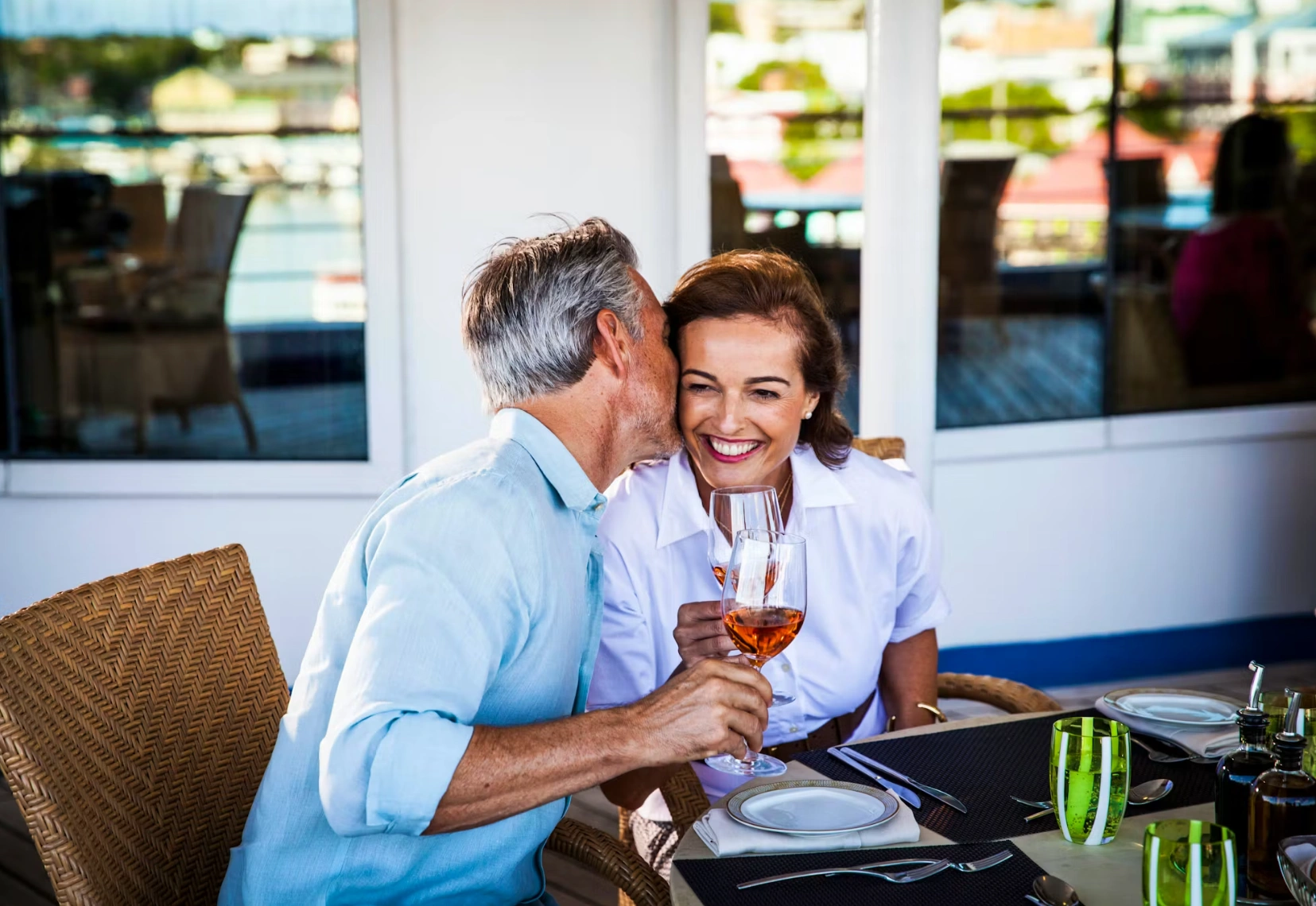
Large theatrical dining rooms still exist, but many travelers now gravitate toward smaller venues where the atmosphere feels less staged and more connected to the surrounding route. Open terraces overlooking the sea remain consistently popular, particularly during warmer evening departures from Mediterranean ports.
Dinner onboard often stretches naturally across several hours.
People linger longer at sea. There is rarely pressure to leave the table quickly. Courses arrive at a slower pace. Conversations drift in and out alongside the sound of nearby water and low music from surrounding lounges.
The setting matters as much as the food itself.
In Northern Europe, darker interiors and candlelit restaurants feel appropriate against colder weather outside. Southeast Asian routes lean brighter and more open-air, with humid evening air drifting through partially covered dining spaces near the outer decks.
Couples tend to remember the environments surrounding meals as much as the meals themselves.
A quiet breakfast before docking in Venice. Late seafood dinners after warm afternoons along the Amalfi Coast. Soup and wine during rough weather crossings near Iceland. Those smaller memories often outlast formal tasting menus.
Room Service at Sea
There is also a quiet appeal to staying inside the suite entirely for certain meals.
Room service onboard premium cruises has evolved far beyond convenience. Breakfast on the balcony has become almost routine for many couples traveling on longer sailings. Fresh fruit, pastries, coffee, newspapers, and simple hot dishes arrive while coastlines slowly shift outside the glass.
During colder routes, some travelers barely leave their suites during stormy afternoons.
Heavy weather creates an entirely different atmosphere onboard. Lounges empty earlier. Outdoor decks close temporarily. Inside larger suites, passengers settle into slower rhythms — reading near the windows, ordering late lunches, watching changing sea conditions through rain-streaked glass.
The ocean dictates the mood more than the itinerary during those days.
Quiet Social Spaces Onboard
One of the more understated pleasures of luxury cruising for couples is the ability to move easily between privacy and gentle social interaction.
Observation lounges, piano bars, library cafés, and sheltered outdoor decks create environments where people can remain comfortably present without constant activity surrounding them.
The social atmosphere onboard premium cruises tends to stay relatively restrained.
Passengers speak quietly. Even busy lounges rarely feel chaotic. During scenic coastal passages, strangers occasionally begin conversations over changing weather conditions or upcoming ports, then drift apart again naturally afterward.
Some couples spend entire afternoons simply moving between different parts of the ship.
A coffee near the observation deck. Reading outside for an hour. A short stop at the spa lounge. Cocktails before dinner while harbor lights appear gradually outside the windows. The day fills itself without requiring much planning.
That ease becomes increasingly valuable for travelers accustomed to highly scheduled vacations on land.
Evenings on the Outer Decks
Night changes the ship completely.
Pool areas empty first. Restaurants thin out gradually afterward. Wind becomes more noticeable once conversations quiet down around the upper decks. Along open ocean crossings, the darkness outside feels unusually complete.
Couples often remain outside longer than expected during these hours.
Some ships provide heated seating areas near observation decks specifically because passengers continue gathering outdoors even in colder conditions. Blankets appear. Drinks cool quickly in the sea air. Small groups speak softly while distant coastal lights fade almost imperceptibly into darkness.
There is little pressure to do anything specific onboard at night.
That absence of urgency may explain why cruises continue attracting travelers looking for slower forms of luxury travel rather than highly structured tourism experiences.
Coastal Routes That Change the Atmosphere
Different cruise regions shape onboard life in very different ways.
Mediterranean sailings remain socially active late into the evening. Open-air bars stay crowded. Shore excursions often extend into nighttime dining ashore. Warm weather encourages passengers to remain outside for much of the day.
Northern routes create quieter habits naturally.
Along Norway’s fjords or Icelandic coastlines, passengers spend longer periods inside panoramic lounges watching weather conditions change across the water. Light behaves differently there, especially during summer sailings when evenings barely darken completely.
In Alaska, couples often wake early simply to watch the coastline from the suite before breakfast service begins. Glacier regions encourage slower observation almost automatically. Even busy passengers become quieter in those environments.
Meanwhile, routes through French Polynesia or parts of Southeast Asia lean toward softer tropical evenings, open deck dining, and slower port arrivals framed by humid air and distant shoreline lighting.
The ship adapts to each region gradually.
So do the passengers.
Modern Romance Without Excess
Luxury travel aimed at couples used to rely heavily on obvious gestures — formal champagne dinners, oversized suites, dramatic entertainment, polished marketing language about romance itself.
Modern cruise experiences feel noticeably less performative.
Couples increasingly value comfort, privacy, environmental design, and freedom from rigid schedules more than staged luxury. A calm suite with uninterrupted ocean views often matters more than extravagant decoration. Quiet dining spaces matter more than crowded nightlife venues.
The strongest cruise experiences rarely insist upon their own importance.
Instead, they allow travelers enough space to notice small things naturally. Reflections moving across the water after dinner. A harbor slowly disappearing during departure. Rain arriving suddenly along a distant coastline while passengers remain warm inside panoramic lounges.
Those moments feel believable because they are not arranged.
And perhaps that is why they stay memorable.
The Return Home Feels Slower
Cruise travel changes the pace of departure itself.
Airports return quickly afterward — bright screens, rolling luggage, compressed schedules, crowded terminals. But many couples leave longer sailings carrying quieter habits with them for several days afterward.
Morning coffee lasts longer. Phones stay ignored a little more often. Evening routines feel less hurried.
Part of that comes from the ship itself.
Luxury cruises create environments where people gradually stop optimizing every hour of the day. Time opens slightly. Ocean movement slows decision-making. Even weather becomes something passengers watch carefully rather than avoid.
Well-designed suites reinforce that shift by giving travelers somewhere comfortable to remain still for a while.
Not every vacation allows for that anymore.
FAQs
Are smaller cruise ships better for couples?
For many travelers, yes. Smaller luxury ships often provide quieter lounges, less crowded dining spaces, and a calmer onboard atmosphere that suits slower, more private travel experiences.
Do couples spend much time inside the suite?
More than many first-time travelers expect. Private terraces, ocean views, room service, and comfortable seating areas naturally encourage slower mornings and quieter evenings inside the suite itself.
Which cruise regions feel most relaxing for couples?
Northern Europe, parts of the Mediterranean, French Polynesia, and selected Southeast Asian routes are especially popular for couples seeking calmer scenery, slower pacing, and more visually immersive sailing experiences.