Where European Cruise Travel Still Feels Unhurried
Around the older ports of southern Europe, cruise passengers often move differently than they do in airports. The pace softens slightly. People linger near gangways instead of rushing through them. Jackets stay draped over shoulders after dinner because the air along the water cools quickly once the sun disappears behind the harbor buildings.
By late evening, many ships remain brightly lit against the shoreline while cafés nearby begin stacking chairs. From the upper decks, small details become noticeable: scooters crossing narrow streets below, laundry shifting from open apartment windows, ferries arriving with commuters long after most tourists have gone back onboard.
Luxury cruise travel has settled into a quieter place recently. Less theatrical than it once was. The appeal is no longer centered entirely around excess or spectacle. Many European travelers now seem drawn toward the slower mechanics of ocean travel itself — long sea days, calmer itineraries, smaller ports, better dining, softer interiors, more private corners to sit with coffee while weather moves across the coastline.
The destinations matter, of course. But so does the distance between them.
A good cruise itinerary leaves room for observation. The best ones allow landscapes to change gradually through the windows rather than arriving all at once through an airport terminal.
Across Europe, a handful of routes continue attracting travelers who value that particular style of movement.
The Mediterranean Still Holds Its Position
The Mediterranean remains difficult to replace, largely because no other cruise region combines weather, architecture, late-night social life, and coastal proximity in quite the same way.
Ships can leave one country after dinner and arrive somewhere entirely different by breakfast. Yet the transitions rarely feel abrupt.
Southern Italy and the Adriatic Coast
The Adriatic routes have become especially popular among travelers looking for something slightly calmer than the busiest western Mediterranean circuits. Ports along Croatia and Montenegro offer a different visual rhythm from cities like Barcelona or Naples.
Stone waterfronts dominate much of the coastline. Buildings appear weathered rather than restored. In smaller harbors, church bells often carry farther across the water than traffic noise.
In places like Dubrovnik or Kotor, passengers tend to return onboard slowly in the late afternoon, usually after extended lunches near the marina or long walks through narrow stair-lined streets where the stone still holds warmth from the day.
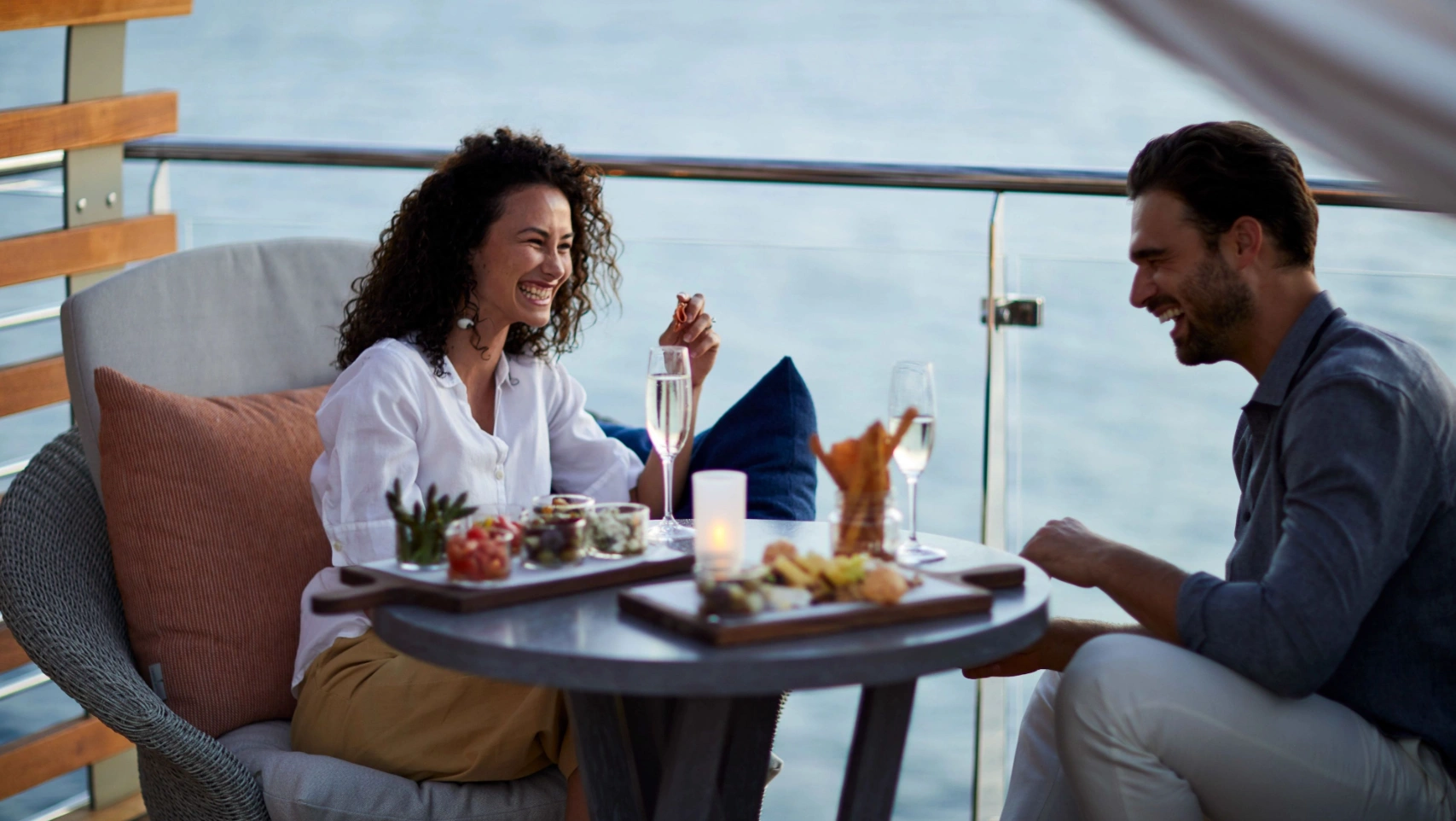
Back onboard, evenings along these routes feel social without becoming loud. Outdoor dining areas remain active late into the night, particularly when weather conditions stay warm enough for open-air service.
White tablecloth restaurants on modern luxury ships have also changed noticeably over the last decade. Less formal. Better lighting. Fewer staged presentations. European passengers often prefer understated dining rooms where conversations can continue naturally without constant interruption.
That shift is visible almost everywhere now.The Greek Islands After Peak Season
Early autumn in the Greek islands remains one of the quieter luxury cruise periods Europeans consistently return to. The summer crowds begin thinning by late September, though the water still retains warmth from August.
Harbors around Santorini and Mykonos look different during this period. The intense midday movement softens. Hotel terraces remain open later into the evening. Wind conditions become less aggressive across some of the smaller island routes.
Luxury cruise passengers often spend these itineraries less aggressively than expected. Long breakfasts stretch into late mornings onboard. Observation lounges fill gradually around noon. Some travelers never even leave the ship in every port.
That restraint says something about how cruise culture has evolved.
The ships themselves increasingly function as floating resorts designed for lingering rather than nonstop activity. Indoor pools stay busy on windy afternoons. Reading lounges remain occupied for hours. Bars with low lighting and quiet jazz playlists often become more popular than large entertainment venues.
Northern Europe Offers a Different Kind of Luxury
Mediterranean routes still dominate in overall popularity, but northern European cruises attract travelers looking for something more atmospheric and less crowded.
The visual palette changes completely.
Gray water. Pine forests. Slate-colored skies. Long stretches of coastline without visible development.
Ships sailing through Norwegian fjords or Baltic passages operate at a slower visual tempo. Much of the experience happens outdoors, even in colder weather. Passengers gather near exterior railings wearing wool coats and carrying coffee cups while waterfalls appear briefly through fog along the cliffs.
Norwegian Fjords and Long Summer Light
Routes through Norway tend to feel quieter onboard than Mediterranean itineraries. There is less nightlife, less shopping activity, less movement overall.
But the scenery creates its own momentum.
In the fjords, ships often enter narrow passages early in the morning while many passengers are still waking up. Curtains open to steep green walls rising directly from the water. Small farms appear unexpectedly along distant hillsides. The light changes constantly because cloud cover moves quickly through the valleys.
Breakfast service during these mornings becomes part of the experience itself. Dining rooms stay unusually quiet except for cutlery and low conversation. People spend more time looking outward than speaking.
The best luxury vessels on these northern routes understand restraint well. Interiors usually lean toward Scandinavian influence — pale woods, brushed metal, soft fabric textures, muted lighting. Large windows matter more here than decorative excess.
There are afternoons when the weather shifts three or four times within an hour. Rain moves through, then sunlight returns briefly, reflecting sharply against the water before disappearing again.
Passengers rarely seem disappointed by it.
Baltic Capitals and Quiet Urban Elegance
Baltic itineraries appeal to travelers who prefer cities over landscapes without wanting the intensity of larger southern European ports.
Stops in Stockholm, Copenhagen, and Helsinki often feel measured and architecturally calm compared to busier Mediterranean destinations.
Cruise terminals here are generally efficient and understated. Travelers move quickly into city centers where cafés open early and waterfront promenades remain active regardless of weather conditions.
Northern European luxury tends to present itself differently. Less ornamental. More material-focused.
Hotels, restaurants, and ships operating in the region often rely on texture rather than visual excess — oak, stone, linen, smoked glass, soft indirect lighting.
That design language carries naturally into modern cruise interiors serving European travelers.
Life Onboard Has Become More Residential
Luxury cruise culture now resembles long-stay resort living more than traditional tourism.
Passengers unpack fully. They establish routines within a day or two. Certain tables become unofficially reserved by habit alone. Crew members begin recognizing coffee preferences by the second morning.
Sea days are increasingly important.
Older cruise models treated time at sea as empty space between destinations. Modern luxury itineraries use those days differently. Schedules remain intentionally lighter. Guests drift between spa areas, lounges, shaded decks, libraries, and restaurants without pressure to maximize activity.
Around mid-afternoon, ships usually settle into their calmest period.
Pools quiet down. Hallways empty. Sunlight shifts lower across deck flooring and glass partitions. Some passengers read alone near observation windows while others nap in shaded outdoor seating areas where blankets remain folded over lounge chairs.
Not every moment onboard feels perfectly curated either, which helps preserve realism.
Coffee cups collect briefly on tables before staff clear them. Wind occasionally disrupts outdoor dinners. Elevators become crowded before evening reservations. Small imperfections make these environments feel lived in rather than staged.
That balance matters.
Dining Has Moved Closer to Regional Travel Culture
Food onboard luxury European cruises has improved substantially, though not always in dramatic ways.
The changes are often subtle.
Bread arrives warmer. Menus rotate more frequently according to region. Seafood feels less standardized. Wine lists increasingly favor smaller European producers rather than only recognizable international labels.
Ships traveling through Spain and Portugal now commonly incorporate regional ingredients onboard before departure. Northern itineraries lean heavier into smoked fish, darker breads, root vegetables, and colder-weather dishes during evening service.
Late dinners remain particularly European in tone.
Passengers often stay seated well past dessert while ports glow quietly outside the windows. In warmer climates, open deck restaurants continue serving until late evening with low lighting reflecting against glass railings and dark water beyond the ship.
There is also less emphasis now on rigid dress culture.
Luxury cruise travelers still dress well, but formality has softened. Linen shirts, tailored knitwear, understated jewelry, neutral colors. The atmosphere feels more contemporary resort than ceremonial luxury.
Smaller Ships Continue Gaining Attention
Across Europe, smaller luxury vessels have gradually attracted travelers moving away from large-scale cruise environments.
Part of this comes down to access.
Smaller ships reach ports larger vessels cannot enter comfortably. They dock closer to town centers. Boarding tends to feel calmer. Public spaces onboard remain quieter because passenger counts are lower.
Routes through coastal France, the Amalfi Coast, and parts of the Aegean particularly benefit from this style of travel.
Passengers aboard smaller ships also tend to spend more time in shared observation areas. Familiarity develops quickly. Bartenders recognize guests within days. Conversations continue naturally between ports without the anonymity often found on larger vessels.
The social atmosphere feels relaxed rather than performative.
You notice it during breakfast especially. People linger longer. Newspapers stay open beside untouched espresso cups while harbor workers move cargo along the docks outside.
Why Europeans Continue Returning to Ocean Travel
Part of the appeal is practical. Cruises simplify complicated multi-country travel while removing many of the friction points associated with airports, train transfers, and hotel changes.
But there is another reason many European travelers continue returning to ocean routes.
The travel itself remains visible.
You see coastlines approaching gradually rather than arriving abruptly through an airplane window. Weather systems move across the sea in real time. Distances feel physical again.
Even onboard routines reinforce that slower awareness.
Morning coffee tastes slightly different outside on colder decks. Evening walks along upper levels become habitual after dinner. Passengers quietly gather near railings whenever ships enter narrow passages or approach older harbors before sunrise.
Some itineraries remain busy and commercial, of course. Not every route delivers calm or refinement. But the best luxury cruises operating through Europe still understand something simple about modern travel: many people no longer want every moment optimized.
A slower crossing has its own value now.
A Softer Ending to the Journey
Toward the final days of most longer cruises, the atmosphere onboard changes slightly.
Passengers begin revisiting favorite spaces one last time — the quieter lounge near the stern, the café with morning sunlight, the deck chairs sheltered from wind during colder evenings at sea.
Suitcases reappear outside cabin doors late at night. Hallways grow quieter earlier than usual.
Then morning arrives, and the ship edges back toward another city skyline.
From the upper decks, ports often look different at dawn than they did on departure days. Delivery trucks move along empty waterfront roads. Harbor lights remain visible against pale early light. Crew members prepare gangways while passengers linger over one final breakfast beside the windows.
The voyage ends gradually, which may be part of why people remember these journeys so clearly afterward.
Not because every moment feels extraordinary.
Mostly because many of them feel real.
FAQs
Why do many European travelers prefer longer cruise itineraries now?
Longer itineraries allow more time at sea and fewer rushed port schedules. Many travelers seem more interested in slower movement, onboard routines, and regional atmosphere rather than trying to visit as many destinations as possible in a short period.
Are smaller luxury cruise ships noticeably different from large vessels?
Usually, yes. Smaller ships tend to feel quieter and more residential. Boarding is often smoother, public spaces are less crowded, and passengers generally spend more time in shared lounges and observation areas.
Which season feels most comfortable for European luxury cruises?
Early autumn remains popular across much of Europe because temperatures stay mild while major summer crowds begin thinning. Northern routes also benefit from softer light and calmer port activity during this period.