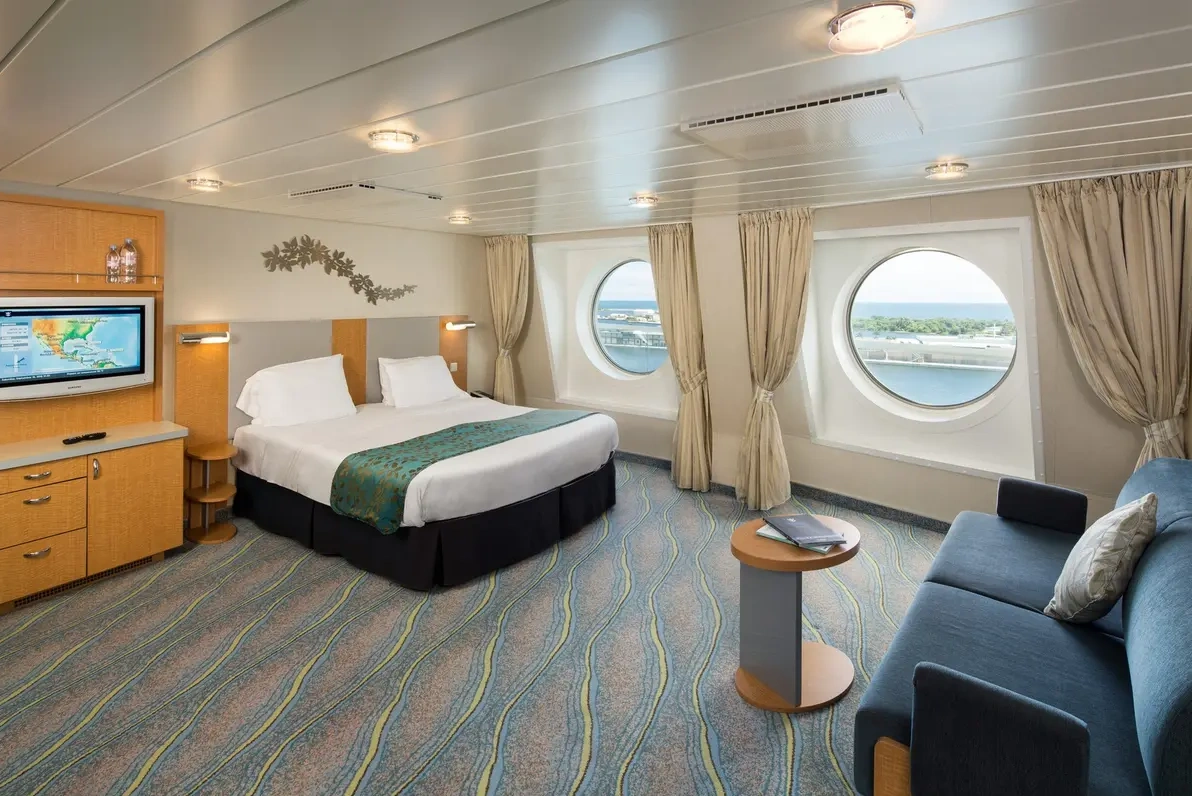
The Window Changes Everything
The difference between an ordinary cabin and a memorable one is often surprisingly simple.
The view.
Not only the size of the window itself, although that matters. More importantly, it is the way the cabin allows the outside world to remain constantly present without overwhelming the room. Good oceanview cabins never compete with the sea. They frame it quietly.
Passengers notice this within the first few hours onboard.
Someone places a bag near the bed, opens the curtains almost absentmindedly, and then stops moving for a moment. The ship has not even fully departed yet, but the changing light across the harbor already alters the atmosphere inside the room.
Modern premium cruise cabins are increasingly designed around that exact interaction.
Large panoramic glass panels, lower-profile furniture, softer materials, indirect lighting, and open sightlines all serve one purpose: keeping the ocean visually connected to daily life onboard.
At sea, even ordinary routines feel different when the horizon remains visible.
Mornings Begin With Light
Oceanview cabins change how travelers wake up.
Hotel rooms on land usually block the outside world deliberately. Thick curtains, enclosed walls, city noise softened behind sealed windows. At sea, light arrives directly into the cabin and shifts constantly according to weather, route, and direction of travel.
Mediterranean mornings often begin warm and bright.
Sunlight spreads across the water early, reflecting sharply into the room before breakfast service even begins. Balcony railings warm quickly beneath the sun while coastal towns remain faintly visible in the distance.
Northern routes create softer mornings entirely.
Passengers wake beneath pale gray skies, low cloud cover, or drifting fog that slowly lifts from fjords and coastal cliffs. The atmosphere inside the cabin feels calmer during these sailings. Travelers move more slowly. Coffee stays untouched longer beside the window.
The scenery shapes behavior quietly.
Beds Positioned Toward the Water
One of the more subtle changes in premium cruise design is how cabins orient furniture toward the view itself.
Older ships often treated windows as secondary architectural features. Modern oceanview suites position seating, beds, and dining areas specifically to maximize visual connection with the water outside.
Passengers spend more time inside because of it.
Reading in bed while weather shifts across the horizon. Watching harbor activity before sunrise arrivals. Sitting near the window during rough weather crossings while rain moves across the glass.
These moments rarely appear in cruise advertising, yet they often become the strongest memories from the voyage itself.
The room stops functioning as temporary accommodation and starts feeling like part of the journey.
Weather Feels Closer
Oceanview cabins also change the relationship passengers have with weather.
Storms no longer feel distant or disruptive. Rain becomes visual texture against the glass. Wind patterns reveal themselves through moving water outside the window. Fog reshapes entire coastlines before the ship even reaches port.
Travelers begin paying attention naturally.
Heavy cloud cover in Northern Europe creates darker, quieter afternoons inside the suite where passengers settle into books, room service lunches, or long conversations near the window. Tropical routes through Southeast Asia or the Caribbean create entirely different atmospheres — bright heat, sudden rainstorms, moving sunlight across turquoise water.
The cabin keeps travelers connected to these changes constantly.
Balconies and the Return of Outdoor Living
Balcony cabins remain among the most desired accommodations in premium ocean travel for good reason.
They create private outdoor space without requiring passengers to fully leave the comfort of the suite itself. That separation matters more than many travelers expect before sailing.
A balcony changes pacing.
People linger outside after waking up. Late-night conversations continue longer near the railing while the ship moves quietly through dark water below. During scenic coastal passages, passengers step outside repeatedly throughout the day simply to check how the environment has changed.
On warmer routes, balcony doors often remain open for hours.
The sound of water moving beneath the ship becomes part of the room’s atmosphere. Salt air settles lightly onto outdoor furniture overnight. Curtains shift gently in the breeze while sunlight reflects across the ceiling inside.
The boundary between indoors and outdoors softens.
Small Rituals at Sea
Oceanview cabins encourage small routines that feel surprisingly personal after several days onboard.
Coffee arriving before sunrise. Blankets pulled onto the balcony during colder northern sailings. Watching port workers prepare the docks during early arrivals while the rest of the ship still sleeps.
Passengers develop habits quickly.
Some spend every evening outside before dinner. Others leave books permanently beside the window seat because they return there repeatedly throughout the voyage. Couples often begin ending the day quietly on the balcony rather than in public lounges.
These routines feel unremarkable while happening.
Later, they become the details people remember most clearly.
Scenic Routes That Transform the Cabin Experience
Certain cruise regions elevate oceanview living almost automatically.
Norwegian fjords are perhaps the clearest example. Cabins become observation spaces throughout the day as cliffs rise directly beside the ship and waterfalls appear unexpectedly through shifting cloud cover. Even passengers who normally prefer public decks often remain inside their suites for long stretches during these sailings simply because the scenery outside changes constantly.
Alaska creates similar behavior.
Travelers wake unusually early there. Curtains open before sunrise. Glacier regions encourage near silence onboard while passengers watch the coastline from private balconies carrying coffee or blankets into the cold air.
Mediterranean routes create a more social atmosphere.
Passengers move between balconies, restaurants, and open decks throughout the evening while coastal lights remain visible for hours after departure. Warm air encourages outdoor living late into the night.
Meanwhile, transatlantic crossings emphasize the cabin itself.
Open water dominates the view for days at a time. Weather becomes the primary visual event. Passengers settle deeply into onboard routines while the suite transforms into a stable private environment moving steadily across the ocean.
Tropical Routes and Open Horizons
Caribbean and South Pacific sailings create perhaps the strongest sense of visual openness.
Water color shifts dramatically depending on depth and sunlight. Islands emerge slowly from the horizon after long stretches of uninterrupted sea. Outdoor terraces remain usable throughout much of the day and evening.
Passengers spend long periods simply watching the water.
Not actively doing anything else. Just observing movement, changing light, distant boats, passing storms, or the texture of the ocean itself.
That simplicity feels increasingly rare in modern travel.
Cabins Designed Around Quiet Comfort
The best oceanview cabins rarely feel flashy.
Premium cruise design has moved away from excessive ornamentation over the last decade. Travelers now prefer spaces that feel calm, functional, and environmentally connected rather than overly decorative.
Soft fabrics dominate newer suites. Lighting stays indirect. Natural textures replace reflective surfaces. Bathrooms feel residential rather than theatrical. Storage disappears neatly into the architecture so the room remains visually open.
Silence matters too.
Well-insulated walls, quieter ventilation systems, and careful corridor placement all contribute to the emotional atmosphere inside the cabin. Passengers notice immediately when a room feels genuinely restful after several consecutive days onboard.
That comfort changes the voyage itself.
Travelers stay inside more willingly during sea days, rough weather, or quiet evenings at sea because the environment supports relaxation rather than merely accommodation.
Observation Without Crowds
One understated luxury of oceanview cabins is the ability to experience scenery privately.
Observation lounges remain beautiful public spaces, but private cabins allow travelers to watch approaching coastlines, changing weather, or evening departures without needing to share the experience constantly with other passengers.
That privacy feels valuable during longer sailings.
Some mornings passengers never leave the suite before lunch. They simply watch the route unfold from bed, the balcony, or the small dining table near the window while the ship moves steadily toward the next destination.
The outside world remains present without demanding anything from them.
Why Travelers Remember the Cabin Most
Passengers often assume destinations will define the cruise before departure.
Later, many realize they remember the cabin just as vividly.
Not because the room itself was extravagant, but because so many quiet moments happened there. Watching rain move across the Atlantic at night. Seeing harbor lights appear through the curtains before sunrise. Reading beside open balcony doors while distant coastlines faded slowly into darkness.
Oceanview cabins hold these experiences together.
They provide stable, private space inside constantly changing environments. The ship moves through weather, coastlines, and open water while the cabin remains calm and familiar each evening.
That continuity creates emotional comfort many travelers do not expect beforehand.
Modern luxury travel increasingly values this kind of understated experience — environments that feel restorative without demanding constant attention or performance.
The strongest oceanview cabins succeed precisely because they never try too hard to impress anyone.
They simply allow travelers to remain close to the sea for a while, with enough quiet space to notice it fully.
FAQs
Are oceanview cabins worth it on longer cruises?
For many travelers, absolutely. Larger windows, natural light, and constant visual connection to the sea make longer voyages feel far more immersive and comfortable.
Do passengers spend much time inside oceanview cabins?
Yes. Many travelers relax, read, dine, or simply watch the scenery from their cabins, especially during sea days or scenic coastal sailings.
Which cruise routes are best for oceanview suites?
Norway, Alaska, the Mediterranean, the South Pacific, and transatlantic crossings are especially admired for scenery that can be enjoyed directly from private cabins and balconies.