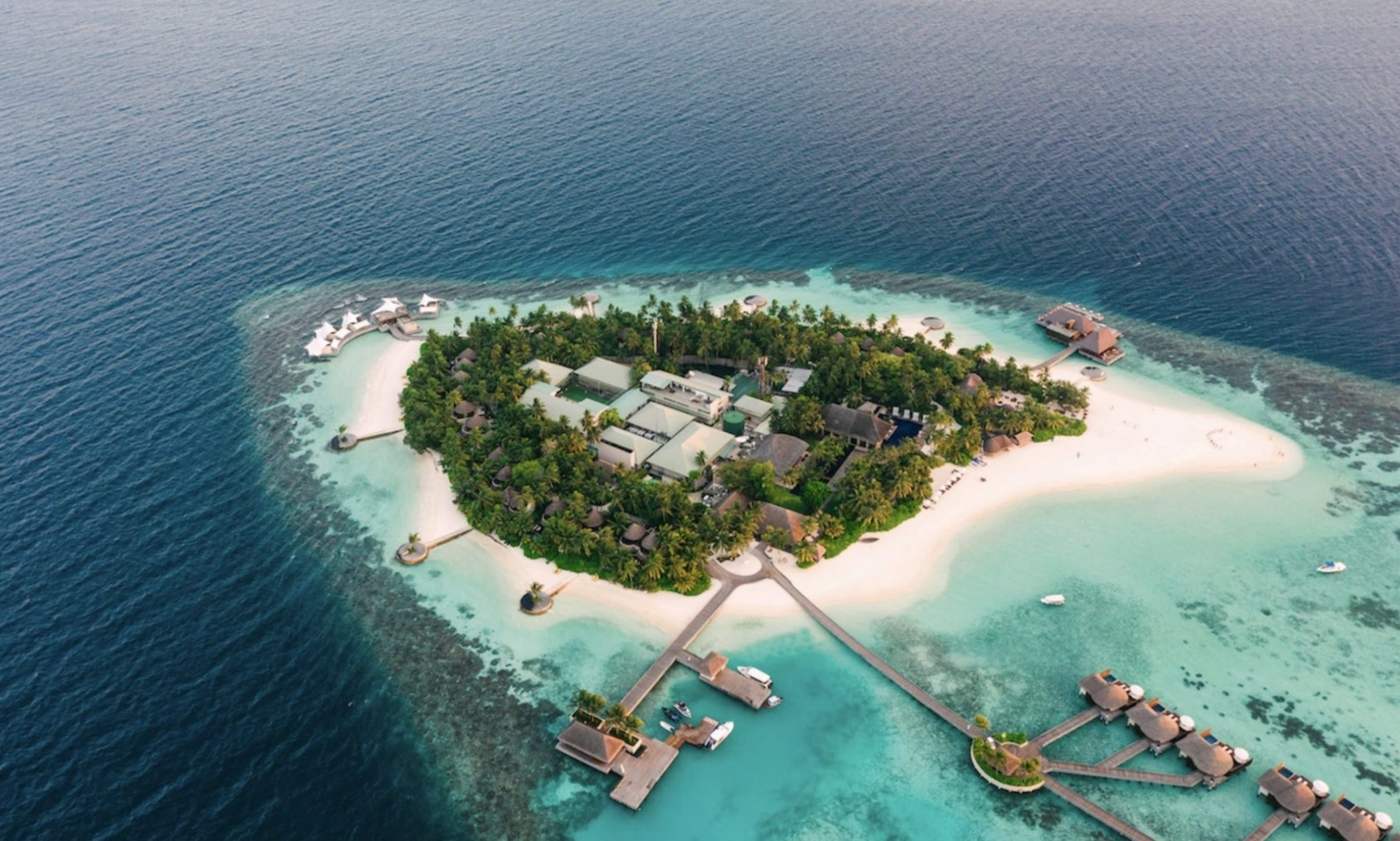
The Arrival Feels Different Immediately
Private islands tend to slow people down before they even step ashore.
The approach itself changes the atmosphere. Large cities disappear entirely from view. Harbor noise fades. The water often becomes clearer near the shoreline while smaller transfer boats move quietly between docks, beaches, and anchored yachts in the distance.
Passengers arriving from longer ocean journeys usually notice the silence first.
Not complete silence, of course. Islands carry their own sounds — wind moving through palms, waves against wooden piers, distant engines from fishing boats offshore, birds circling above the shoreline early in the morning.
But the noise feels environmental rather than mechanical.
There are fewer interruptions competing for attention.
Private island escapes continue attracting luxury travelers partly because they offer physical separation from the density and compression of modern travel routines. Airports, crowded streets, hotel districts, schedules, and traffic all begin feeling unusually distant once the coastline settles quietly around you.
That separation creates immediate relief for many travelers.
Resorts Built Around Open Space
The strongest private island resorts rarely try to fill every section of the landscape.
Instead, they preserve emptiness carefully.
Large stretches of shoreline remain undeveloped. Villas sit hidden between vegetation rather than grouped tightly together. Walking paths curve slowly through palms, coastal forest, or volcanic rock instead of following rigid resort layouts.
This spacing changes behavior naturally.
Guests walk more slowly. Conversations lower in volume. Meals stretch longer because nobody feels pressure to move quickly toward the next activity. Even arrival routines feel calmer than most luxury properties on the mainland.
The environment itself reduces urgency.
Villas Designed for Privacy
Modern private island villas increasingly emphasize residential comfort rather than visible extravagance.
Large terraces, shaded outdoor seating, private plunge pools, outdoor showers, and wide glass openings toward the sea dominate contemporary island architecture. Interiors remain intentionally restrained — soft fabrics, pale woods, stone surfaces, indirect lighting.
The ocean remains the visual center of the experience.
Guests spend surprising amounts of time simply sitting outside the villa without doing very much at all. Watching weather shift across the horizon. Listening to water moving beneath nearby docks. Reading during late afternoon heat while ceiling fans turn slowly overhead.
The strongest resorts understand that private space itself has become one of luxury travel’s most valuable qualities.
The Return of Barefoot Living
Private islands create environments where formality fades naturally.
Shoes disappear quickly. Linen replaces structured clothing. Guests move between breakfast, swimming, spa terraces, and dinner without much separation between indoor and outdoor life.
The atmosphere feels relaxed without becoming careless.
Luxury island travel today leans heavily toward understated comfort rather than visible performance. Service remains attentive but discreet. Public spaces stay quiet enough for guests to hear the surrounding water and wind throughout the day.
This softer style of hospitality appeals strongly to travelers who have grown tired of highly choreographed luxury experiences elsewhere.
Ocean Rhythms Shape the Day
Life on private islands tends to organize itself around natural conditions rather than schedules.
Morning light arrives intensely near the water. Beaches remain coolest before midday heat settles across the sand. Afternoon storms appear suddenly in tropical regions before clearing again within an hour. Evening breezes reshape outdoor spaces after sunset.
Guests adapt instinctively.
Breakfasts happen earlier. Lunch stretches lazily through the hottest part of the afternoon. Sunset becomes a shared daily ritual even for travelers who rarely think about sunsets at home.
Weather feels present constantly.
That connection creates immersion many travelers miss in urban luxury environments where climate, lighting, and sound are carefully controlled indoors.
Rain, Wind, and Coastal Atmosphere
Private islands feel especially atmospheric during changing weather.
Rain moving across open water becomes visible long before it arrives. Palm trees shift direction with stronger wind patterns. Wooden pathways darken temporarily beneath tropical storms before drying again in the heat.
Guests rarely seem frustrated by these interruptions.
Instead, weather often slows the island down even further.
Outdoor bars fill quietly during afternoon rain. Spa pavilions become warmer and calmer while storms move offshore again. Dinner service begins later because nobody feels pressure to follow strict schedules.
The environment dictates the mood naturally.
Dining Beside the Water
Meals on private islands feel different partly because the ocean never fully disappears from view.
Breakfast terraces overlook quiet shorelines where small boats drift near the horizon. Lunch happens beneath shaded structures open to sea air. Evening restaurants glow softly beside the water while waves remain audible beneath nearby decks.
The pace stays intentionally slow.
Guests linger between courses without rushing conversation. Wine glasses remain untouched while people watch changing light across the harbor. Some dinners stretch for several hours simply because the environment encourages stillness.
Luxury dining increasingly values atmosphere over performance.
The strongest island resorts understand this well. Menus stay regional and fresh without becoming overly theatrical. Service remains calm and observant rather than heavily formal.
Seafood and Coastal Simplicity
Private island cuisine often succeeds through restraint.
Fresh seafood, tropical fruit, local herbs, simple grilled dishes, and lighter evening meals fit naturally into warmer coastal environments. Travelers increasingly appreciate food that feels connected to the island itself rather than imported luxury disconnected from the surrounding region.
Outdoor dining becomes part of daily rhythm rather than a special event.
Bare feet against wooden decking. Salt air settling onto tables after sunset. Distant boats moving slowly beyond the restaurant lighting.
These details remain memorable because they feel grounded and believable.
Islands That Prioritize Quiet
Not all private islands aim for the same atmosphere.
Some remain socially active with beach clubs, music, and larger communal spaces. Others focus almost entirely on privacy and environmental calm. Increasingly, luxury travelers seem drawn toward the quieter end of that spectrum.
The appeal feels practical rather than philosophical.
People want environments where they can hear themselves think again.
Smaller islands naturally support this mood better. Limited guest numbers reduce noise throughout the property. Beaches remain uncrowded even during peak hours. Spa areas overlook empty sections of coastline rather than active public spaces.
At night, darkness returns fully.
Without surrounding cities nearby, island skies feel wider and less interrupted. Outdoor pathways stay softly lit while the ocean itself disappears almost completely into blackness beyond the shore.
Guests remain outside longer because of it.
The Luxury of Distance
Private islands create a form of distance modern travelers increasingly value.
Not isolation exactly. Connectivity still exists when needed. Comfort remains extremely high. But physical separation from dense urban environments changes attention spans noticeably after only several days.
Phones stay unused longer. Reading becomes easier again. Conversations drift more naturally without constant interruption.
Ocean travel already encourages these habits. Private islands extend them further.
The combination feels restorative precisely because it remains so simple.
Smaller Islands and Sustainable Design
Many newer luxury island resorts are also moving toward quieter forms of development overall.
Architecture stays lower against the landscape. Materials reflect local climate conditions. Open-air ventilation reduces dependence on enclosed spaces. Walking paths replace vehicles whenever possible.
Guests respond positively to these choices because the islands continue feeling environmentally authentic rather than overbuilt.
The strongest private island escapes preserve a sense of place.
Fishing boats still move near the shore. Coastal vegetation remains dense and imperfect. Beaches change shape slightly after storms or changing tides. Nature stays visible instead of being fully controlled.
That realism matters increasingly in luxury travel.
Leaving Feels Surprisingly Emotional
Departures from private islands often feel slower than arrivals.
Guests linger over breakfast longer on the final morning. Bags remain unpacked until late. People walk the shoreline one last time before transfer boats return to the dock.
The island shrinks gradually once the boat pulls away.
Terraces disappear behind trees. Beaches narrow into pale strips against the coastline. Eventually only scattered lights remain visible above the water before the open sea takes over again.
Private island escapes stay memorable partly because they create emotional contrast through simplicity rather than excess.
Travelers remember quiet breakfasts near the shore. Warm rain passing through the palms during the afternoon. Wind moving across outdoor curtains at night. Salt collecting lightly on wooden railings by morning.
The strongest islands never try too aggressively to impress anyone.
They simply provide enough space, comfort, and natural beauty for people to settle into a slower version of themselves for a while.
For many travelers now, that feels increasingly rare.
FAQs
Why are private island resorts so appealing to luxury travelers?
Private islands offer space, privacy, quieter environments, and a stronger connection to nature compared to crowded urban resorts or large tourist destinations.
Do private island resorts feel isolated?
Usually not. Most luxury islands balance privacy with high-quality dining, wellness spaces, water activities, and comfortable social areas while still maintaining a calm atmosphere.
Which regions are best known for private island escapes?
The Maldives, French Polynesia, parts of the Caribbean, Southeast Asia, and select Mediterranean islands remain especially popular for refined private island travel experiences.