Some Places Stay Quiet on Purpose
Not every luxury destination announces itself loudly.
Some coastal resorts remain difficult to notice from the water until the ship or small transfer boat moves unexpectedly close to shore. A few low buildings appear between trees. Warm terrace lighting becomes visible beneath the cliffs. Pathways emerge gradually from dense coastal vegetation while the sea continues moving quietly against the rocks below.
Passengers often remember these arrivals more vividly than major ports.
There are no crowded terminals or dramatic entrances. The atmosphere feels restrained from the beginning. Staff move calmly. Voices stay low. Wind and water remain the dominant sounds along the shoreline.
Hidden luxury resorts with ocean views increasingly appeal to travelers who have grown tired of heavily exposed tourism environments where every experience feels designed for visibility first and comfort second.
These quieter properties offer something different.
Less performance. More atmosphere.
Coastal Design That Blends Into the Landscape
Many modern luxury resorts no longer try to dominate the coastline visually.
Architects increasingly favor low-profile structures, natural materials, shaded terraces, muted colors, and open layouts that feel connected to the surrounding environment rather than separated from it. From the water, some resorts nearly disappear into the cliffsides or coastal vegetation behind them.
This approach changes the emotional tone immediately.
Travelers arrive and feel space instead of spectacle. Outdoor lounges remain partially open to sea air. Stone pathways warm beneath the afternoon sun. Wooden railings collect salt overnight from changing wind conditions.
The environment remains physically present throughout the stay.
That realism matters.
Luxury travelers increasingly prefer destinations that still feel geographically grounded rather than completely insulated from weather, landscape, and local atmosphere.
Rooms Oriented Toward the Horizon
Oceanview rooms shape behavior differently than inland accommodations.
People wake earlier near the coast. Curtains remain open longer at night. Guests spend unexpected amounts of time simply sitting near the balcony or terrace watching weather move across the water instead of filling every hour with activity.
The best hidden resorts understand this instinct naturally.
Furniture faces outward toward the sea rather than inward toward screens or decorative features. Outdoor spaces feel private enough for long stretches of uninterrupted quiet. Lighting softens gradually after sunset instead of overpowering the surrounding darkness.
These details create comfort without demanding attention constantly.
Passengers arriving from longer cruise itineraries often settle into these environments immediately because the pacing feels compatible with life at sea — slower, more observant, less compressed.
The Importance of Silence
One understated luxury many hidden coastal resorts offer exceptionally well is controlled quiet.
Not silence entirely. Coastal environments are rarely silent.
You still hear wind shifting through vegetation, distant waves against the rocks, seabirds overhead, harbor sounds far offshore, or rain moving briefly across outdoor terraces before disappearing again.
But unnecessary noise disappears.
Traffic fades. Crowded pool music remains absent. Public spaces feel spacious enough that conversations never dominate the atmosphere completely.
Travelers notice this quickly even if they rarely describe it directly.
Mediterranean Retreats Beyond the Major Ports
The Mediterranean still contains remarkable coastal resorts hidden beyond its busiest destinations.
Smaller islands in Greece, quiet stretches of the Croatian coast, parts of southern Italy, and lesser-known corners of the Balearics continue attracting travelers looking for oceanfront luxury without constant visibility or nightlife culture.
These properties often reveal themselves slowly.
Narrow roads descend toward the sea through dry hillsides and olive groves. Terraces appear above hidden coves. Restaurants operate beneath woven shade structures overlooking water so clear that boats remain visible beneath the surface even from elevated dining spaces.
Afternoons stretch naturally in places like this.
Lunch becomes late afternoon. Swimming breaks divide long reading sessions near the water. Evening drinks begin before sunset and continue quietly after darkness settles across the coastline.
There is little urgency.
Small Harbors and Coastal Villages
Many hidden Mediterranean resorts remain connected to working coastal villages rather than isolated private developments.
Fishing boats still move through the harbor early each morning. Local cafés operate beside small waterfront markets. Church bells drift faintly across the water during warmer evenings while resort guests remain scattered across terraces overlooking the sea.
This connection to ordinary coastal life creates realism many travelers increasingly value.
The destination feels lived-in rather than staged.
Guests move between resort comfort and local atmosphere naturally throughout the day without needing elaborate excursions or planned entertainment.
Atlantic Resorts and Weather-Driven Atmosphere
Atlantic-facing coastal resorts create a different emotional experience entirely.
The scenery feels broader. Weather changes faster. Wind remains more visible across the water. Ocean color shifts constantly depending on cloud cover and sea conditions.
Portugal’s coastline, parts of northern Spain, sections of Ireland, and scattered Atlantic islands increasingly attract travelers looking for this moodier style of ocean retreat.
The strongest properties embrace these environmental conditions rather than trying to soften them completely.
Large windows frame rough water and changing skies. Covered terraces allow guests to remain outdoors during rain. Restaurants use softer lighting and warmer materials against cooler coastal weather.
Storms become part of the atmosphere.
Travelers settle beside fireplaces or panoramic lounges watching heavy cloud systems move across the sea while waves break below the cliffs outside.
These environments encourage stillness naturally.
The Luxury of Weather
Weather has become an unexpected luxury element in modern ocean travel.
Not perfect weather necessarily. Varied weather.
Travelers increasingly appreciate destinations where environmental conditions remain visible and dynamic rather than fully controlled. Rain creates texture. Fog reshapes the coastline. Wind changes outdoor movement and lighting conditions throughout the day.
Hidden coastal resorts often preserve this connection beautifully because they remain less commercialized and less engineered around constant activity.
Guests adapt their pace to the environment instead of forcing the environment to support nonstop schedules.
Tropical Resorts Designed Around Open Space
In tropical regions, hidden luxury resorts often emphasize openness rather than enclosure.
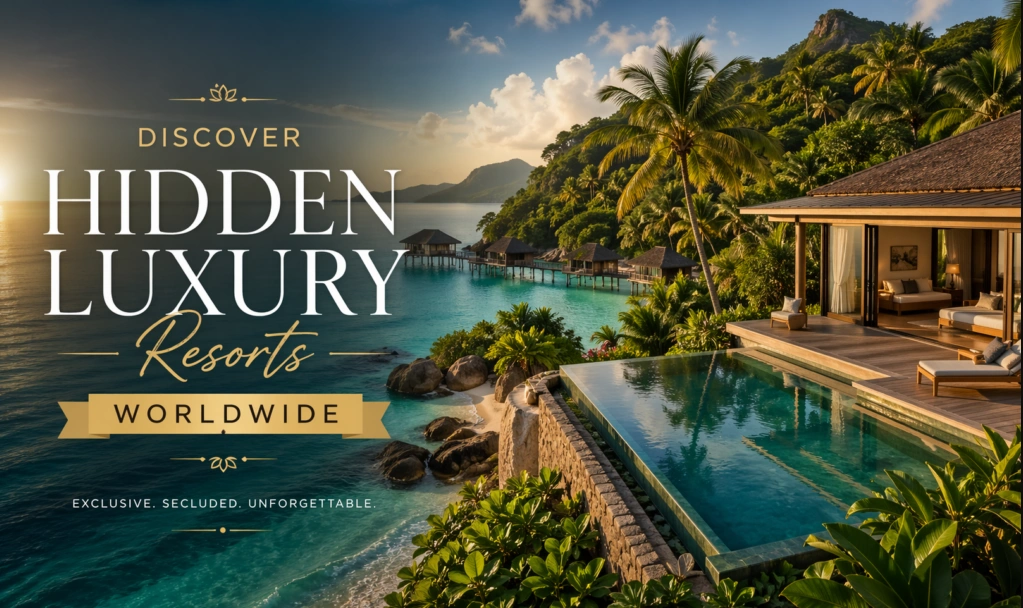
Properties across Southeast Asia, French Polynesia, and quieter Caribbean islands increasingly use architecture that dissolves boundaries between indoor and outdoor living. Open-air lounges, partially exposed dining spaces, shaded terraces, and private plunge pools create environments where sea air remains part of daily life constantly.
Humidity, light, and sound shape the atmosphere continuously.
Ceiling fans move slowly above breakfast tables while distant rain approaches across the water. Palm shadows shift across stone pathways during the afternoon heat. Outdoor showers remain warm long after sunset.
The sensory experience feels physical rather than decorative.
Privacy Without Isolation
One reason travelers increasingly prefer hidden ocean resorts is the balance between privacy and subtle social atmosphere.
Guests can remain almost entirely secluded if they choose, yet restaurants, waterfront lounges, spa terraces, and beach paths still create opportunities for gentle interaction throughout the day.
The atmosphere remains understated.
People read quietly beside infinity pools. Couples linger over late lunches near the shoreline. Small groups gather for cocktails before sunset while boats move slowly across the harbor in the distance.
Nobody seems eager to rush anywhere.
Dining Beside the Water
Oceanfront dining changes pacing automatically.
Meals last longer when the horizon remains visible beside the table. Travelers pause more often between conversations simply watching changing light across the water or listening to nearby waves beneath outdoor terraces.
The strongest hidden resorts understand restraint in dining design.
Lighting stays low after sunset. Music remains secondary to the surrounding environment. Menus focus on regional ingredients without excessive presentation or theatrical service rituals.
The atmosphere feels residential rather than performative.
Breakfasts become especially memorable in quieter resorts.
Early morning coastal air, warm coffee, fresh fruit, pastries, and nearly empty terraces overlooking calm water create a slower beginning to the day than most travelers experience elsewhere.
Why Hidden Ocean Resorts Matter Now
Luxury travel culture has changed noticeably over the last several years.
Travelers increasingly seek environments where they can slow down without feeling disconnected entirely from comfort or beauty. Hidden ocean resorts answer that instinct well because they create calm through design, pacing, and atmosphere rather than overwhelming activity or visible exclusivity.
The strongest properties rarely advertise themselves aggressively.
They rely instead on location, environmental quality, thoughtful architecture, and emotional consistency throughout the stay.
Guests leave remembering ordinary details more than dramatic ones.
The sound of harbor movement late at night. Salt collecting on balcony railings by morning. Rain passing briefly across the sea during lunch. Light shifting through the room before sunrise.
These memories feel believable because they were never staged too carefully.
Hidden luxury resorts succeed precisely because they leave enough space for travelers to notice the coastline quietly on their own terms.
Sometimes the ocean view does most of the work already.
FAQs
Why are hidden ocean resorts becoming more popular?
Many travelers now prefer quieter destinations with less crowding, calmer atmospheres, and stronger connections to nature, scenery, and slower travel experiences.
Do smaller coastal resorts feel more relaxing than large luxury hotels?
Often, yes. Smaller properties usually provide quieter public spaces, more privacy, and a stronger sense of environmental immersion near the water.
Which regions are known for hidden luxury ocean resorts?
Parts of the Mediterranean, Portugal’s Atlantic coast, Southeast Asia, French Polynesia, and smaller Caribbean islands are especially admired for understated oceanfront luxury experiences.