The Quiet Usually Arrives Gradually
Relaxation at sea rarely happens immediately.
Most travelers board a cruise carrying the pace of wherever they came from. Airport noise still lingers mentally. Notifications continue arriving. Bags remain half unpacked during the first afternoon onboard while passengers move quickly through restaurants, observation decks, and upper lounges trying to see everything before departure.
Then evening settles across the water.
The coastline begins fading into darkness behind the ship. Hallways soften into quieter movement. Public decks empty slightly as wind grows cooler after sunset. Somewhere during that first night, the pace onboard changes almost without announcement.
By morning, people start moving differently.
Breakfast lasts longer. Phones stay untouched for extended stretches. Travelers linger near windows watching changing light across the ocean instead of rushing immediately toward the next activity.
Ocean retreats designed around relaxation depend heavily on this gradual slowing rather than dramatic transformation.
The strongest voyages never try too hard to convince passengers to relax. They simply create enough space, comfort, and visual calm for the shift to happen naturally.
Suites Built Around Comfort Instead of Spectacle
Modern luxury cruise suites increasingly resemble quiet residential spaces rather than formal hotel accommodations.
Older ships often emphasized decoration and visual impact. Newer premium retreat-style cruises focus more on livability. Softer materials, indirect lighting, panoramic seating areas, muted fabrics, and larger outdoor terraces now shape the atmosphere inside many high-end accommodations.
Passengers spend more time inside these suites than many first-time travelers expect.
Not because there is nothing happening elsewhere onboard, but because the environment itself becomes restful enough to remain in comfortably for long periods. Reading beside open balcony doors. Ordering breakfast while approaching a coastline at sunrise. Listening to weather move across the water late at night.
These moments rarely feel dramatic while they happen.
That is partly why they stay memorable.
The Importance of Light and Space
Light shapes mood at sea constantly.
Morning sunlight arrives differently depending on the route. Mediterranean sailings bring warmer brightness through the windows early in the day, while northern itineraries often begin beneath softer gray skies that gradually brighten across the water.
Well-designed suites respond carefully to these changes.
Large windows allow the environment outside to remain visually present throughout the day. Adjustable lighting softens the transition into evening. Outdoor terraces create separation between interior quiet and open ocean movement without fully disconnecting the two.
Passengers settle into routines around these spaces naturally.
Some keep the balcony doors open until late evening just to hear the water below. Others spend stormy afternoons near the windows watching rough weather pass across the horizon while wrapped in blankets from the suite closet.
Relaxation onboard often comes from environmental consistency rather than isolated luxury moments.
Smaller Ships and Calmer Atmosphere
Smaller premium ships continue attracting travelers looking for quieter forms of ocean travel.
Lower passenger counts reduce noise almost immediately. Elevators remain less crowded. Hallways stay calm throughout the day. Observation lounges feel more like private clubs than public entertainment spaces.
Staff recognition happens naturally after only a few days onboard.
Passengers begin returning to the same café tables each morning or ordering familiar drinks in the evening lounges without much thought. The atmosphere becomes residential surprisingly quickly.
This sense of familiarity contributes heavily to relaxation.
Travelers stop navigating constantly. The ship becomes understandable. Movement through daily routines feels easy.
That comfort allows attention to shift outward toward scenery, weather, reading, conversation, or simply resting.
Scenic Routes That Encourage Stillness
Certain cruise regions naturally support slower travel rhythms better than others.
Northern Europe remains one of the strongest examples.
Fjord routes through Norway create long stretches where passengers simply observe the landscape in near silence. Steep cliffs rise directly beside the water while waterfalls appear briefly through low cloud cover. Even large ships feel subdued in these environments.
People gather quietly near panoramic lounges or sheltered outdoor decks without much conversation.
The scenery does most of the work.
Mediterranean sailings create a softer kind of relaxation. Warm evenings extend outdoor dining later into the night. Sea conditions often remain calmer. Coastal towns glow visibly from private balconies long after departure.
Passengers drift slowly between restaurants, observation decks, and their suites rather than following tightly structured schedules.
In the South Pacific and parts of Southeast Asia, relaxation becomes more physical.
Warm air, open-water horizons, tropical coastlines, and outdoor living spaces encourage passengers to spend long stretches simply moving between shaded terraces, pools, spas, and balconies throughout the day.
The environment itself slows people down.
Sea Days and the Absence of Obligation
Many experienced travelers eventually prefer sea days over port days.
There is no schedule to keep beyond meals or personal routines. No transportation to organize. No crowded landmarks waiting ashore. The ship continues moving while passengers remain still.
That combination feels surprisingly restorative.
Sea days allow travelers to settle fully into the onboard atmosphere. Morning coffee stretches longer. Books finally hold attention for several uninterrupted hours. Spa appointments happen slowly rather than fitting into tightly planned itineraries.
People rediscover boredom slightly at sea.
Not negative boredom — quieter mental space where observation replaces constant stimulation.
You notice weather patterns. The changing color of the water. How sunlight reflects differently during late afternoon compared to morning. Which lounge becomes warmest after rain moves through.
These are small observations, but they create presence.
Dining Designed Around Slower Hours
Relaxation onboard extends into dining culture as well.
Premium ocean retreats increasingly avoid rigid schedules and theatrical restaurant environments. Instead, the atmosphere leans toward smaller venues, quieter service, open seating, and meals that feel connected naturally to the surrounding route.
Breakfast becomes especially important at sea.
Passengers wake slowly and often remain at the table longer than they would on land. Fresh fruit, coffee, pastries, newspapers, and changing views through the windows create a rhythm that feels almost residential after several days onboard.
Lunch tends to drift casually across the afternoon.
People arrive from the pool deck still carrying towels or books. Outdoor terraces fill gradually while sunlight shifts across the water. Nobody seems eager to leave quickly afterward.
Even dinners feel less performative than traditional luxury travel once did.
Lighting stays restrained. Conversations remain soft. Restaurants prioritize comfort over spectacle.
Quiet Bars and Observation Lounges
The most relaxing spaces onboard are often the simplest ones.
Observation lounges positioned high above the water remain central to premium retreat-style cruising. Travelers gather there during rough weather, scenic passages, or quiet evenings when the ship itself feels especially calm.
Some passengers barely speak for hours.
They read. Watch the coastline. Listen to rain against the windows. Nurse a drink slowly while cloud cover moves across distant mountains or open ocean.
These shared quiet spaces feel increasingly rare in modern travel.
Luxury hotels often push activity constantly — rooftop parties, entertainment schedules, crowded social environments. Premium ocean retreats allow silence to exist comfortably without treating it as emptiness needing to be filled.
That distinction matters.
Wellness Without Performance
Wellness at sea has changed considerably in recent years.
Luxury cruise retreats still include spas, fitness areas, and wellness programs, but the strongest experiences now feel less performative and more integrated into daily onboard life.
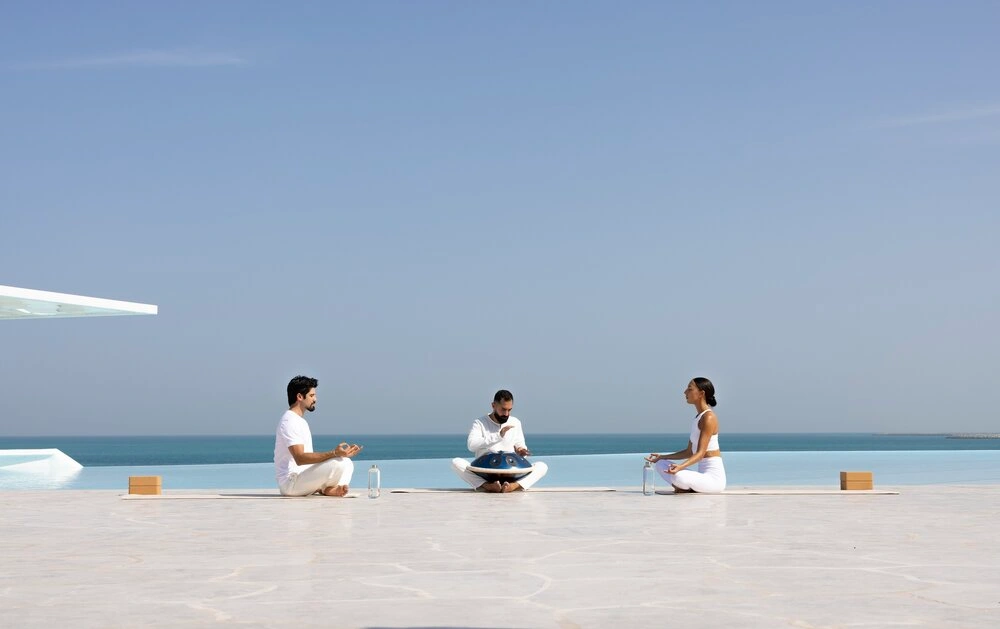
Open-air yoga decks face sunrise rather than mirrors. Spa lounges overlook moving coastlines. Walking tracks circle the outer decks where weather and sea air remain part of the experience itself.
Passengers participate casually.
A swim before breakfast. A massage during rainy afternoons at sea. Quiet reading after time in the thermal spa. Evening walks along the outer deck while harbor lights disappear behind the ship.
The atmosphere remains restorative without constantly announcing itself as wellness culture.
Weather and Emotional Space
One reason ocean retreats feel calming is because weather remains visible throughout the journey.
Passengers stop treating rain or cloud cover as interruptions. Storm systems become something to observe instead. Fog softens coastal arrivals. Wind changes the atmosphere across outdoor decks. Heavy cloud cover transforms observation lounges into sheltered spaces where people settle comfortably for hours.
The ship keeps moving through all of it.
That continuity creates reassurance.
Travelers do not need to adjust plans constantly or navigate unfamiliar streets during changing conditions. The environment shifts around them while comfort remains stable inside the ship itself.
There is relief in that predictability.
The Return to Land Feels Sharper
Passengers often notice the effects of ocean retreats most clearly once the voyage ends.
Airports feel louder afterward. Traffic feels harsher. Even ordinary schedules seem slightly too compressed during the first days back home.
But certain habits linger temporarily.
Longer mornings. Slower dinners. More attention paid to weather outside the window. A reduced urge to fill every hour with activity.
Ocean travel rarely changes people dramatically.
What it often does instead is restore forms of quiet attention that modern routines gradually wear down over time.
Watching changing light across the water. Sitting still during bad weather without frustration. Spending uninterrupted hours reading near an open balcony door while the ship moves steadily forward.
These experiences feel increasingly valuable precisely because they remain so ordinary.
The strongest ocean retreats understand this instinctively.
They do not overwhelm travelers with constant stimulation or exaggerated luxury language. They simply provide enough calm space for passengers to settle into themselves again for a while.
At sea, sometimes that is more than enough.
FAQs
Why do travelers find ocean cruises relaxing?
The steady pace, uninterrupted scenery, simplified routines, and quieter onboard environments allow many travelers to disconnect from constant scheduling and daily distractions.
Are sea days important on luxury cruises?
Very much so. Sea days give passengers time to enjoy the ship itself, settle into slower routines, and experience the calming atmosphere of open-water travel.
Which cruise regions feel the most peaceful?
Northern Europe, the South Pacific, parts of the Mediterranean, and selected Southeast Asian routes are especially known for calm scenery, slower pacing, and relaxing onboard environments.