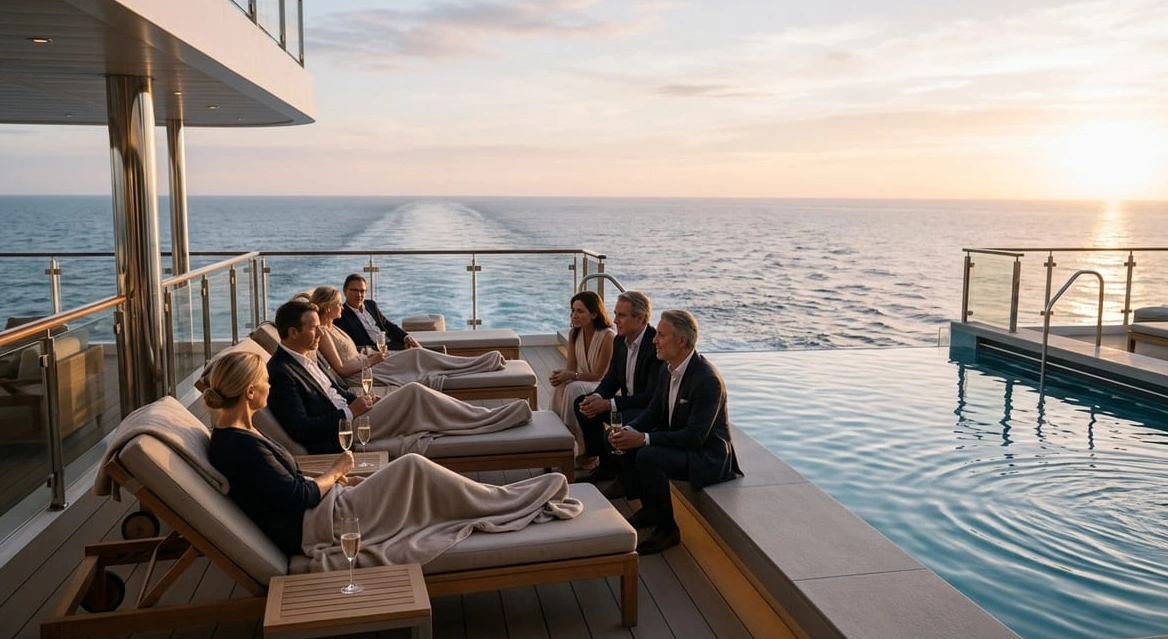
The Appeal Feels Different Now
Luxury sea travel once centered heavily around spectacle.
Grand staircases. Formal gala nights. Endless activity schedules printed across thick daily brochures left outside cabin doors every evening.
That version of cruising still exists in some places, but many modern travelers seem drawn toward something quieter now.
The strongest luxury sea journeys today focus less on performance and more on livability. Ships are designed to feel calmer over long periods. Cabins resemble modern coastal apartments rather than theatrical suites. Public spaces allow people to disappear for a while without constantly being surrounded by noise, announcements, or crowds.
Passengers themselves have changed too.
People travel more frequently now. They recognize manufactured luxury quickly. Over-designed environments tend to feel exhausting after several days rather than impressive.
Modern cruise culture increasingly values subtle comfort instead.
Reliable quiet.
Good lighting.
Uncomplicated service.
Large windows.
Long afternoons with nowhere urgent to be.
Sea travel supports those things unusually well because movement itself becomes part of daily life onboard.
The ocean slows everything slightly.
Ships Have Become More Residential
The newest generation of luxury vessels often feels closer to boutique hospitality than traditional cruising.
Interior designers now approach ships differently than they did twenty years ago. Public lounges resemble private clubs or contemporary hotels rather than entertainment complexes. Libraries remain genuinely usable. Observation areas prioritize seating comfort and visibility instead of decorative excess.
The materials onboard matter more too.
Pale oak flooring. Textured fabrics. Matte stone surfaces. Warm indirect lighting. Furniture designed for long conversations rather than quick turnover.
Passengers notice these details slowly over the course of a voyage.
A comfortable chair near the windows becomes part of someone’s morning routine by the second or third day. A café tucked beside the observation deck quietly fills with familiar faces every afternoon after lunch.
The strongest ships encourage habit naturally.
That sense of familiarity matters more during longer sailings where passengers begin treating the vessel almost like temporary residence rather than transportation.
Even hallways feel quieter on newer premium ships.
Carpeting absorbs sound better. Lighting stays softer at night. Public announcements occur less frequently. Small operational details shape the atmosphere more than many travelers initially realize.
Modern Travelers Want Flexible Luxury
One noticeable shift in cruise culture is how differently passengers now use their time onboard.
Older luxury travel models often assumed guests wanted highly structured days filled with organized activities, formal dining schedules, and constant social engagement.
Modern travelers tend to prefer flexibility instead.
Some spend entire sea days moving quietly between the spa, observation lounge, and balcony without attending a single scheduled event. Others leave the ship only briefly in port before returning onboard early to enjoy quieter public spaces while excursions remain busy ashore.
There is less pressure now to participate in everything.
That freedom changes the onboard atmosphere substantially.
Passengers appear more relaxed because schedules no longer dominate the experience. Dining times stretch later. Breakfast often continues into mid-morning. Lounges remain occupied throughout the afternoon by travelers reading, working remotely, or simply watching weather move across the water.
Luxury increasingly means having enough space to choose your own pace comfortably.
Sea travel supports that naturally.
Mediterranean Routes Still Define Contemporary Cruise Culture
Many modern luxury sea journeys continue orbiting around the Mediterranean because the region balances scenery, climate, food culture, and navigable distances unusually well.
Passengers can move between dramatically different coastlines within relatively short sailings while maintaining a sense of continuity throughout the voyage.
The onboard atmosphere shifts according to geography too.
Cruises through Italy and Greece often feel social and outdoor-oriented. Deck restaurants remain active late into the evening beneath warm air and harbor light. Open lounges fill gradually after sunset while nearby coastlines remain visible from the upper decks.
Meanwhile, Adriatic routes near Croatia or Montenegro tend to create calmer rhythms onboard.
Smaller ports. Narrower coastal passages. More time spent watching scenery itself rather than focusing entirely on destination schedules.
Passengers increasingly appreciate these quieter transitions between places.
Modern luxury travel feels less obsessed with maximizing efficiency than it once did.
Sometimes the hours between destinations become the strongest part of the journey.
Northern Europe Continues Attracting Slower Travelers
Luxury cruises through northern Europe appeal strongly to travelers who prefer atmosphere over intensity.
Routes through Norway, the Baltic region, or around parts of Iceland operate at an entirely different visual tempo from warm-weather Mediterranean sailings.
The scenery encourages observation.
Passengers gather quietly near windows while ships move through fjords beneath low cloud cover. Water reflects pale gray light for hours at a time. Forests and cliffs remain visible from cabins long after dinner service begins.
These itineraries also attract travelers comfortable with slower routines.
Sea days feel contemplative rather than entertainment-driven. Libraries remain occupied. Lounges stay calm throughout the afternoon while passengers sit with coffee, wine, or books near panoramic glass.
Weather becomes part of the experience rather than an inconvenience.
Rain moving across distant coastlines. Fog lifting slowly from the water near dawn. Wind forcing passengers briefly indoors before the sky clears again.
Northern sailings feel deeply tied to environmental conditions.
That realism appeals strongly to many modern travelers.
Cabins Matter More During Longer Voyages
Modern luxury sea journeys place enormous importance on cabin design because passengers spend more time inside their rooms than they once did.
Cabins now function as private retreat spaces rather than simple sleeping quarters.
Balconies have become larger across many premium ships. Seating faces outward toward the horizon. Bathrooms use residential-style materials instead of purely functional finishes. Lighting systems adjust gradually through evening hours rather than remaining uniformly bright.
Passengers settle into these environments quickly.
Books accumulate beside beds. Blankets remain folded across balcony chairs during colder sailings. Morning coffee arrives routinely at nearly the same time each day.
There is something psychologically calming about returning to the same room every evening while the landscape outside continues changing completely.
Cruises preserve continuity in ways conventional travel often cannot.
No repeated hotel check-ins.
No constant packing.
No airport transitions interrupting momentum every few days.
The world moves while your environment remains stable.
That balance feels increasingly valuable right now.
Dining Culture Has Become Less Formal and More Regional
Food aboard luxury ships has changed noticeably over the last decade.
Dining rooms now resemble contemporary city restaurants more than ceremonial banquet spaces. Menus rotate according to regional routes. Open kitchens, outdoor terraces, and smaller specialty venues increasingly replace oversized formal dining halls.
Passengers seem happier with this softer approach.
Meals unfold more naturally.
Lunch extends longer during sea days because no one feels rushed toward afternoon schedules. Dinner reservations begin later, especially on Mediterranean itineraries where warm weather keeps outdoor seating comfortable well into the evening.
The strongest ships also integrate regional culture more carefully into onboard dining itself.
Mediterranean sailings emphasize seafood, olive oils, citrus, and lighter wines. Northern routes lean toward smoked fish, darker breads, root vegetables, and richer evening dishes suited to colder climates.
These details quietly reinforce the geography surrounding the ship.
Travel feels more connected when the onboard environment responds to the route itself.
Quiet Social Spaces Define Modern Cruise Luxury
Large entertainment venues still exist onboard most luxury ships, but many passengers increasingly gravitate toward quieter social spaces instead.
Observation lounges.
Wine bars.
Outdoor terraces.
Libraries.
Smaller piano lounges with low lighting and slower conversation.
These environments allow social interaction without requiring performance.
Passengers read alone near one another. Couples linger over late drinks while the coastline fades into darkness beyond the windows. Small conversations continue naturally across multiple evenings because people repeatedly return to the same spaces at similar hours.
The atmosphere feels residential rather than transactional.
That distinction shapes much of contemporary luxury travel culture overall.
People increasingly value environments where they can simply exist comfortably for long stretches without constant stimulation demanding attention.
Ships designed around quieter social flow tend to age better emotionally over multi-day voyages.
Passengers leave feeling rested rather than overloaded.
Why Sea Journeys Continue Resonating With Modern Travelers
Luxury sea journeys fit surprisingly well within the broader shift happening across travel culture.
Travelers increasingly seek continuity, comfort, and manageable pacing rather than nonstop novelty alone. They want movement without chaos. Variety without logistical exhaustion.
Cruises solve many of those tensions naturally.
You still cross borders and climates.
You still experience changing landscapes, regional food, weather, architecture, and culture.
But the underlying environment remains stable enough to support genuine rest at the same time.
That combination is difficult to achieve elsewhere.
The strongest luxury voyages understand this clearly now. They no longer try to overwhelm passengers with constant spectacle or excessive formality. Instead, they create conditions where travelers can gradually settle into the journey itself.
Long mornings.
Quiet afternoons.
Changing coastlines.
Soft light reflecting across open water outside the windows.
For many modern travelers, that version of luxury feels more relevant than ever.
FAQs
Why are modern luxury cruises less formal than older cruises?
Many travelers now prefer relaxed elegance over rigid dress codes and highly structured schedules. Cruise lines have adapted by creating more flexible dining, softer interiors, and calmer onboard environments.
Are sea days considered important on luxury itineraries now?
Very much so. Many experienced travelers specifically choose voyages with additional sea days because they allow more time to enjoy the ship, rest, and settle into slower routines.
What makes northern European cruises appealing to modern travelers?
Northern routes offer quieter atmospheres, dramatic scenery, slower pacing, and strong connections to weather and natural light, which many travelers find calming and immersive.