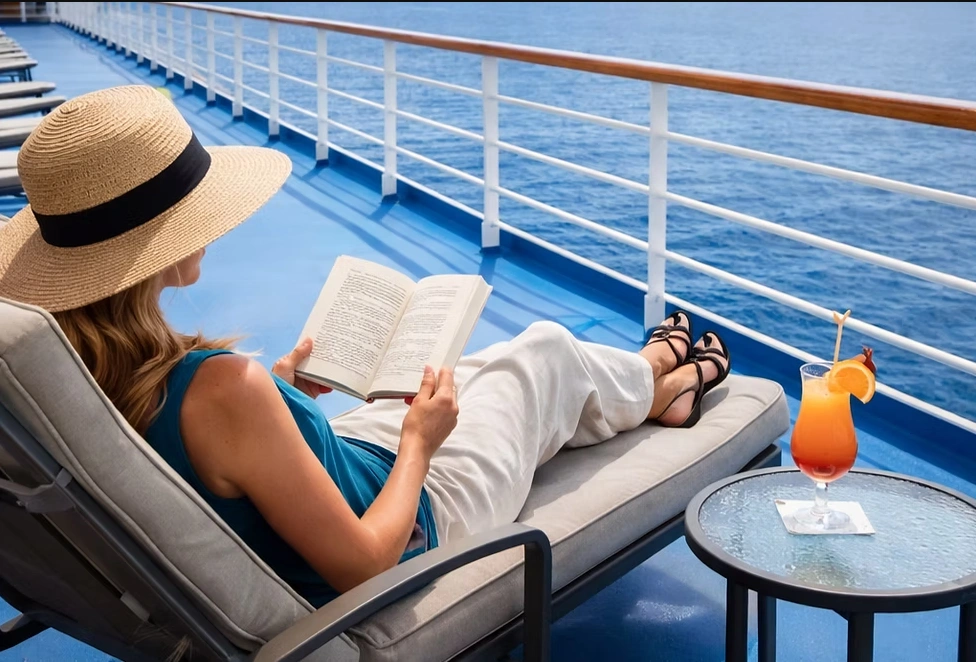
Some Trips Feel Calmer Before They Even Begin
Certain cruise itineraries create a noticeably different mood from the moment passengers arrive at the terminal.
The atmosphere tends to be quieter. Fewer oversized tour groups. Less visible urgency. Travelers move more slowly through check-in areas carrying linen jackets, paperbacks, and small carry-on bags instead of oversized luggage piled onto carts.
Even the ships often look different.
Lower profiles. Softer exterior lighting. More glass. Less visual excess.
The most relaxing cruise escapes this year are not necessarily the largest or most expensive voyages operating globally. Many of them succeed because they understand pacing better than spectacle. They leave enough room between destinations. They avoid overloading itineraries with constant port stops. They treat onboard life as part of the journey rather than downtime between excursions.
Passengers notice this quickly once the ship leaves shore.
Public decks stay calm during the first afternoon at sea. Dining reservations feel unhurried. Lounges fill gradually instead of all at once. The ship begins settling into its own internal rhythm before evening even arrives.
By dinner, most people have already slowed down without realizing it.
Mediterranean Sailings Still Offer the Softest Evenings
Warm-weather routes through southern Europe continue attracting travelers looking for slower, more restorative travel experiences.
Part of that appeal comes from climate itself.
Mediterranean evenings encourage people outdoors naturally. After sunset, upper decks remain active for hours beneath warm air and low harbor light. Conversations stretch longer around outdoor restaurants. Music from nearby coastal towns occasionally drifts faintly across the water while ships remain docked overnight.
Cruises through Italy, Greece, and parts of coastal Croatia feel especially relaxed during late spring and early autumn when temperatures soften slightly and the summer crowds begin thinning.
Passengers onboard these itineraries rarely seem eager to fill every hour.
Breakfast often extends well into the morning. Pool decks stay quiet during port days. Many travelers return to the ship earlier than planned simply because the onboard atmosphere feels calmer than crowded city centers outside.
The transitions between destinations also remain relatively gentle.
A ship leaving Santorini at sunset may spend the entire following day crossing open water toward southern Italy while passengers drift between cafés, observation lounges, shaded deck seating, and quiet balconies.
Nothing about the schedule feels rushed.
That softness is increasingly difficult to find elsewhere in travel.
Norwegian Fjords Create a Different Kind of Calm
Relaxation aboard northern European cruises works differently.
Mediterranean routes encourage warmth and social energy. Norwegian fjord itineraries lean toward silence, weather, and visual stillness.
The scenery changes passenger behavior almost immediately.
People speak more quietly outdoors. Observation lounges remain occupied for hours without much movement. Travelers gather along railings during early morning sailings through narrow fjords while waterfalls emerge briefly through shifting fog.
Cruises through Norway feel deeply tied to natural light conditions.
Summer routes often continue beneath pale evening skies long past normal sunset hours. During colder sailings, cloud cover changes rapidly across the cliffs, turning the water dark gray one moment and silver the next.
Cabins become particularly important on these itineraries.
Passengers spend longer stretches inside reading beside panoramic windows or drinking coffee while the ship moves quietly through narrow coastal passages. Blankets remain folded over balcony chairs. Heated lounge spaces fill gradually during rainy afternoons.
There are hours onboard these northern voyages where very little happens externally.
Yet passengers rarely seem bored.
The environment itself carries enough atmosphere to hold attention naturally.
Smaller Ships Tend to Feel More Restful
Many of the most relaxing cruise experiences this year come from smaller luxury vessels rather than large-scale resort ships.
Passenger flow changes substantially once onboard populations decrease.
Elevators stay quiet. Restaurants feel less crowded. Public lounges develop a more residential atmosphere because the same people return to familiar spaces throughout the voyage.
Smaller ships also reach calmer ports.
Instead of arriving beside industrial terminals built for massive cruise traffic, these vessels often dock closer to town centers or anchor offshore near quieter coastal villages where tenders move passengers gradually between ship and shore.
The difference becomes noticeable immediately upon arrival.
Mornings feel less chaotic. Excursions depart in smaller groups. Returning onboard after lunch rarely involves long queues or crowded gangways.
Passengers onboard smaller ships also tend to establish routines quickly.
Favorite café tables become unofficially claimed by habit alone. Bartenders remember drink preferences within days. Conversations continue naturally across multiple evenings without the anonymity larger vessels sometimes create.
Relaxation onboard often comes from familiarity more than isolation.
Smaller ships understand that balance particularly well.
Sea Days Are Becoming the Main Attraction
Experienced cruise travelers increasingly prioritize itineraries with additional sea days built into the schedule.
Several years ago, cruise marketing focused heavily on maximizing destination count. More ports, more excursions, more movement.
Now many luxury travelers prefer the opposite.
Too many port stops can make cruises feel fragmented. Constant early departures and busy sightseeing schedules eventually recreate the same exhaustion travelers hoped to escape in the first place.
Sea days restore continuity.
Passengers wake without alarms. Weather dictates activity levels naturally. Lounges fill slowly throughout the morning instead of emptying immediately toward excursion buses and crowded terminals.
A good sea day contains very little urgency.
Breakfast near the windows.
Reading beside the pool.
Long lunches that drift into late afternoon.
Perhaps a massage appointment or a slow walk around exterior decks once the light softens near evening.
The ocean itself creates enough movement to prevent the experience from feeling static.
Outside the windows, weather continues shifting. Water changes color gradually through the day. Distant ships appear briefly along the horizon before disappearing again.
People settle into these patterns surprisingly fast.
Quiet Luxury Has Replaced Formal Luxury
The most relaxing cruise escapes this year share another characteristic: they avoid trying too hard.
Luxury cruise culture has changed noticeably away from spectacle and rigid formality. Travelers now seem more interested in comfort, space, lighting, privacy, and atmosphere than ceremonial excess.
That shift appears everywhere onboard modern premium ships.
Dining rooms use softer lighting and lower noise levels. Suites prioritize residential comfort over dramatic decoration. Spa facilities lean toward minimalist design instead of oversized resort theatrics.
Passengers dress well, though less formally than before.
Neutral fabrics, knitwear, linen shirts, understated jewelry. Evening spaces feel elegant without requiring rigid performance from guests themselves.
The strongest ships also avoid overcrowding public areas with constant activity.
Some lounges remain intentionally quiet throughout the day. Libraries stay genuinely peaceful. Observation decks preserve open seating rather than turning every available space into entertainment programming.
Passengers seem grateful for that restraint.
Many travelers spend enough of ordinary life surrounded by stimulation already.
Coastal Routes Through France and Italy Feel Especially Timeless
Shorter luxury itineraries along the western Mediterranean have become particularly appealing for travelers seeking calmer escapes without committing to extended voyages.
Routes passing southern France and coastal Italy tend to combine comfortable weather, excellent food, manageable sailing distances, and visually rich coastlines within relatively compact schedules.
Ships often remain close enough to land that passengers can watch hillside villages, marinas, and coastal roads drifting past for hours between destinations.
Evenings along these routes feel unusually cinematic without trying to be.
Harbor lights reflecting against dark water. Quiet piano music inside open lounges. The sound of dishes and low conversation carrying softly across outdoor dining decks while the coastline slowly fades behind the ship.
Passengers frequently stay awake later than planned during these sailings simply because the environment remains pleasant well into the night.
No one seems eager to return inside too quickly.
Relaxation Comes From Predictability Too
Part of what makes cruises restorative is the stability they create.
The room stays the same.
The bed stays the same.
Coffee arrives from the same café every morning. Familiar crew members appear throughout the voyage. Even the subtle engine vibration beneath the floor eventually becomes reassuring rather than noticeable.
Travelers often underestimate how exhausting repeated transitions can become during conventional multi-city trips.
Packing. Airports. Train schedules. Hotel check-ins. Taxi logistics.
Cruises remove much of that decision-making fatigue.
Passengers can focus more attention on weather, scenery, conversation, food, or simple rest because basic movement happens automatically around them.
That predictability feels increasingly valuable right now.
Not boring.
Comforting.
Why These Escapes Feel Especially Relevant This Year
Travel culture continues shifting toward experiences that feel calmer, slower, and more sustainable emotionally over longer periods.
Luxury cruises align with that shift unusually well when designed thoughtfully.
The strongest itineraries no longer try to overwhelm passengers with nonstop activity or visible extravagance. Instead, they create environments where people can gradually relax into the voyage itself.
Long mornings.
Soft lighting.
Open water.
Uncomplicated routines.
Space to disappear quietly for several hours without missing anything important.
Those qualities are shaping many of the most appealing cruise experiences this year across Europe and beyond.
And for travelers tired of treating every trip like a performance, that calmer approach feels increasingly difficult to resist.
FAQs
Are shorter luxury cruises still relaxing, or do they feel rushed?
Shorter itineraries can feel very relaxing when they include enough sea time and avoid excessive port schedules. Coastal Mediterranean routes are especially good at balancing movement with downtime.
Why do many travelers prefer smaller luxury ships now?
Smaller ships generally feel quieter and less crowded, with calmer boarding processes, more personal service, and easier access to smaller coastal destinations.
Which cruise season feels most comfortable for relaxation?
Late spring and early autumn are often considered ideal because temperatures remain pleasant while ports and onboard spaces feel less crowded than peak summer periods.