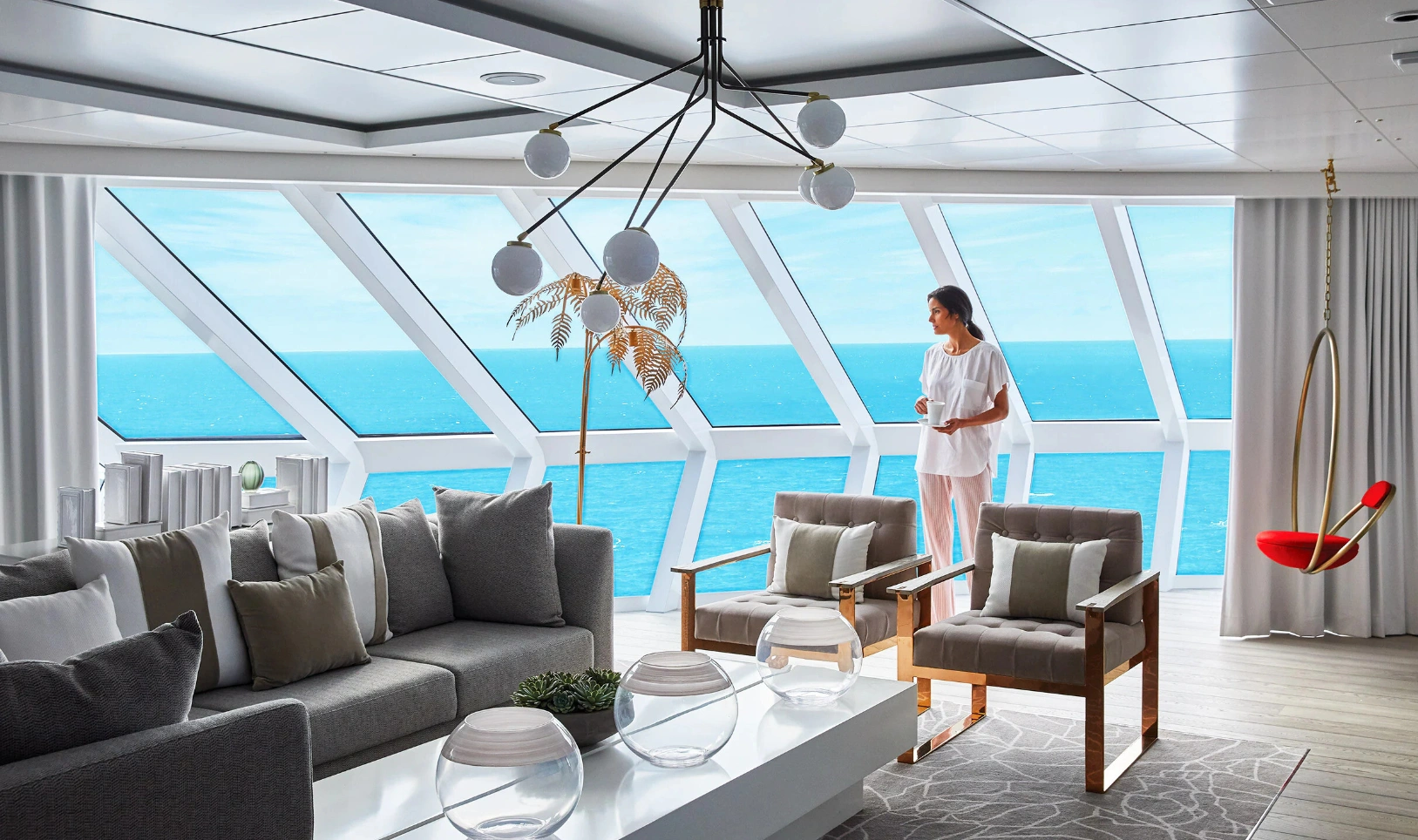
A Different Perspective at Sea
The first thing many travelers notice inside a well-designed cruise suite is not the furniture or the welcome champagne waiting near the window. It is the light.
At sea, light behaves differently. Early mornings carry a pale silver tone across the water, especially in northern routes where cloud cover moves quickly and the horizon rarely stays still for long. By late afternoon, warmer reflections settle into the glass panels and polished wood interiors. Even inside larger suites, people tend to drift toward the windows without thinking much about it.
Modern cruise design understands this instinct. The best suites rarely try to compete with the ocean outside. Instead, they frame it carefully.
On newer ships crossing the Mediterranean, Northern Europe, and parts of the South Pacific, many premium suites now feel closer to contemporary coastal apartments than traditional hotel accommodations. Floor-to-ceiling glass, textured stone surfaces, low-profile lighting, and quiet neutral fabrics create spaces that remain comfortable during long stretches at sea. Some travelers barely leave their balconies during slower mornings between ports.
Not every cruise day is dramatic. Often, the memorable moments are smaller.
A tray of coffee arriving just after sunrise. Damp railings after overnight rain. The low sound of harbor machinery drifting across the water before dawn arrivals. People lingering in observation lounges while coastal fog slowly lifts from the shoreline.
Luxury ocean travel has shifted toward these quieter details over the past several years. The appeal is less about formal extravagance and more about time, space, and perspective.
Suites Designed Around the Ocean
Large cruise suites once focused heavily on size alone. Now, many premium lines place greater emphasis on layout, privacy, and connection to the surrounding scenery.
In Mediterranean itineraries, suites often prioritize open terraces and outdoor living space. Along colder northern routes, enclosed verandas and insulated panoramic lounges have become increasingly common. The design choices feel practical rather than decorative.
Cabins facing glacier regions in Alaska or Norway frequently use softer interior palettes — muted oak finishes, brushed metal, layered textiles — partly because harsh reflective surfaces can feel uncomfortable against intense natural light outside.
The difference becomes noticeable after several days onboard.
Passengers settle into routines surprisingly quickly. Some read near the windows every afternoon. Others leave balcony doors slightly open to hear the water at night. During longer crossings, suites begin to function less like temporary accommodations and more like personal living spaces moving steadily between coastlines.
The Importance of Quiet Layouts
Noise management matters more than many travelers expect.
Well-designed premium suites are often positioned away from elevators, entertainment decks, or central staircases. Hallways remain subdued even during busier sailing days. Soft carpeting, recessed lighting, and insulated walls create a calmer environment that feels distinctly separate from the activity elsewhere onboard.
This separation becomes especially noticeable after crowded port excursions.
Returning from busy cities like Barcelona, Dubrovnik, or Naples, passengers often move more slowly once back inside the ship. Elevators empty. Lounge traffic fades. Balcony doors reopen. The contrast between crowded ports and quieter private spaces becomes part of the rhythm of the journey, even if travelers rarely describe it that way directly.
Materials That Age Well at Sea
Ocean air affects everything.
Salt settles onto outdoor glass overnight. Wood surfaces require constant maintenance. Fabrics fade differently under uninterrupted sunlight. Premium cruise lines invest heavily in materials that hold up under these conditions while still feeling comfortable rather than overly formal.
Soft woven textures, matte finishes, thick curtains, brushed stone countertops, and indirect lighting tend to dominate modern suite interiors. Highly reflective surfaces have become less common in newer luxury ship designs.
There is also a noticeable move away from excessive ornamentation. Many high-end cruise suites now feel understated in a way that resembles contemporary boutique hotels in coastal cities rather than traditional grand resorts.
Scenic Routes That Reward Slow Observation
Some cruise itineraries encourage constant activity. Others naturally slow people down.
Northern European sailings are especially good at this.
Along the Norwegian coast, weather changes rapidly throughout the day. Clear blue skies can disappear behind low cloud cover within an hour. Villages appear briefly between steep green cliffs before vanishing again behind the ship’s wake. During longer fjord passages, passengers gather quietly near panoramic lounges without much conversation.
Even large ships tend to feel subdued in these environments.
Mediterranean routes create a different atmosphere altogether. Open decks remain active later into the evening. Outdoor dining stretches long after sunset. Ports feel denser, warmer, louder. Yet many travelers still return early to their suites simply to watch the coastline recede from private balconies while harbor lights flicker against the water.
The movement itself becomes part of the experience.
You notice distances differently at sea.
Crossing Through Southeast Asia
Routes through parts of Southeast Asia often combine humid tropical weather with calmer ocean conditions. Ships moving between Singapore, Vietnam, Thailand, and Indonesia frequently spend extended periods close to visible coastlines, which changes the visual experience considerably.
Fishing boats remain visible for hours. Storm systems build gradually across the horizon. Ports arrive with dense urban skylines rather than isolated terminals.
Inside premium suites, climate control and shaded outdoor spaces become essential rather than optional luxuries. Travelers move between cool interiors and warm sea air constantly throughout the day.
Late evenings tend to stay active onboard in this region. Observation decks, piano lounges, and open-air dining terraces often remain occupied well past midnight.
Longer Ocean Crossings
Transatlantic sailings attract a different kind of traveler entirely.
Days stretch out. Schedules loosen. People begin recognizing each other in cafés and reading lounges after several mornings at sea. Conversations become slightly less formal by the third or fourth day.
On these crossings, suites matter more.
Passengers spend longer uninterrupted periods inside their accommodations, especially during rougher weather. Window seating, spacious bathrooms, proper dining tables, and comfortable lighting become practical features rather than marketing details.
During colder crossings, many travelers simply watch the weather for long periods. Heavy cloud systems moving across open water can hold attention surprisingly well when there is nowhere else to rush toward.
Dining Spaces That Reflect the Journey
Food onboard luxury cruises has gradually become more regional and less theatrical.
Formal dining rooms still exist, but many travelers now prefer smaller venues with quieter atmospheres and more localized menus connected to the itinerary itself.
In the Mediterranean, seafood dominates naturally. Olive oils vary noticeably between ports. Wines shift by region every few days. Outdoor terrace restaurants remain busy late into the evening, especially after warmer sailing days.
Northern routes lean toward richer dishes, slower dinners, darker interiors, and heavier textures inside the restaurants themselves. Candlelight reflects differently against large windows when darkness arrives early outside.
Some of the most memorable meals onboard are not elaborate at all.
A quiet breakfast during an early docking. Fresh bread delivered to the suite before sunrise excursions. A late soup and glass of wine after returning from cold coastal weather. Travelers often remember these smaller moments more clearly than large tasting menus.
Observation Lounges and Social Spaces
Luxury cruise ships have become noticeably better at designing quieter public spaces.
Large entertainment venues still exist, but many passengers spend more time in smaller lounges positioned near panoramic windows or outdoor deck edges protected from wind. These areas develop their own subtle routines over time.
Morning coffee crowds differ from evening cocktail groups. Readers tend to claim similar corners each afternoon. Some passengers barely speak to one another yet begin exchanging familiar nods by the middle of longer sailings.
The atmosphere shifts with the route as well.
Rainy weather fills indoor lounges quickly. Warm evenings empty passengers onto open decks. During scenic coastal passages, even normally quiet observation spaces become busier for an hour or two before settling again.
There is rarely much urgency onboard premium cruises. That may be part of the appeal.
Modern Resort Culture at Sea
Luxury cruise culture has changed quietly over the last decade.
Travelers still appreciate comfort and service, but the atmosphere onboard many premium ships feels less formal than it once did. Dress codes have softened. Public spaces feel more residential. Travelers move through ships casually rather than ceremonially.
This shift has influenced suite design too.
Many accommodations now include larger sofas, dining corners, workspaces, and expanded outdoor terraces because travelers spend more time simply living onboard rather than treating the ship as a purely transitional environment.
You see it most clearly during sea days.
People settle into routines that resemble temporary neighborhood behavior more than traditional vacation patterns. Morning walks around outer decks. Familiar café orders. Afternoon reading in the same lounge chair. Quiet conversations developing slowly over several days.
The ship itself becomes a moving environment rather than simply transportation between destinations.
Evenings Along the Water
Evenings tend to bring the ship into focus differently.
During departures from coastal cities, passengers gather along railings while tugboats move below and harbor lights gradually pull farther away. Music drifts lightly from open lounges without overwhelming the surrounding sound of wind and water.
Later at night, the ship quiets considerably.
Pools empty first. Restaurants thin out slowly afterward. Hallways soften into near silence except for distant engine vibration beneath the floors. From private balconies, only scattered lights remain visible across the water.
On certain routes, particularly in colder northern regions, travelers sometimes stay outside longer than expected simply because the changing light refuses to disappear completely.
There is no dramatic conclusion to most evenings at sea. People eventually close balcony doors, dim suite lighting, and prepare for another port the following morning.
That understated routine is part of what keeps many travelers returning.
A Slower Kind of Luxury
The strongest cruise experiences are often the least performative ones.
Not every day brings extraordinary scenery or major excursions. Sometimes the memorable part is simply having uninterrupted time near the water without constant noise, traffic, or rigid schedules pressing against the day.
Luxury suites contribute to that feeling when they are designed thoughtfully. Large windows matter. Comfortable seating matters. Quiet corridors matter. So does having enough space to remain indoors during rough weather without feeling confined.
Ocean travel changes the pace of observation.
You begin noticing weather patterns, harbor activity, dining habits, lighting conditions, and coastline geography in ways that rarely happen during faster forms of travel. The ship moves continuously, but daily life onboard often becomes calmer as the journey progresses.
By the final days of longer sailings, many passengers stop photographing every view. They simply sit near the windows and watch the water move past.
That may be the clearest sign of a well-designed cruise experience.
FAQs
Why do many travelers prefer suites on longer cruises?
Longer sailings usually involve more sea days and extended time onboard. Spacious layouts, larger windows, quieter seating areas, and private outdoor space become noticeably more valuable after several consecutive days at sea.
Are observation lounges still important when passengers have private balconies?
Very much so. Observation lounges offer wider panoramic views, changing social energy throughout the day, and shelter during colder or windy routes where balconies may be less practical for long periods.
Which cruise regions are best for scenic suite views?
Northern Europe, Alaska, parts of the Mediterranean, and sections of Southeast Asia tend to offer especially strong scenery from private balconies and panoramic suites due to changing coastlines, active harbors, and varied weather conditions.